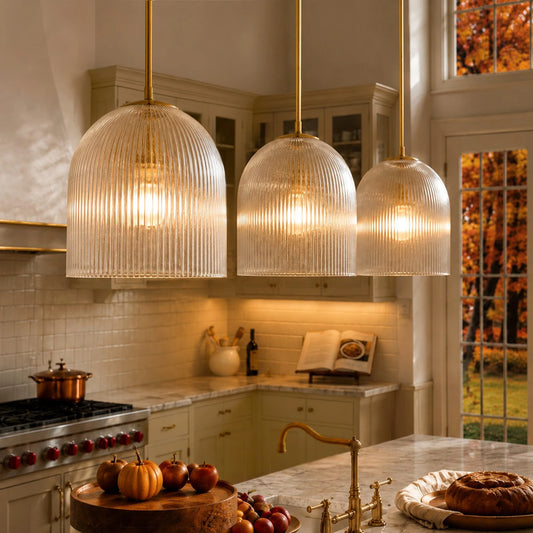
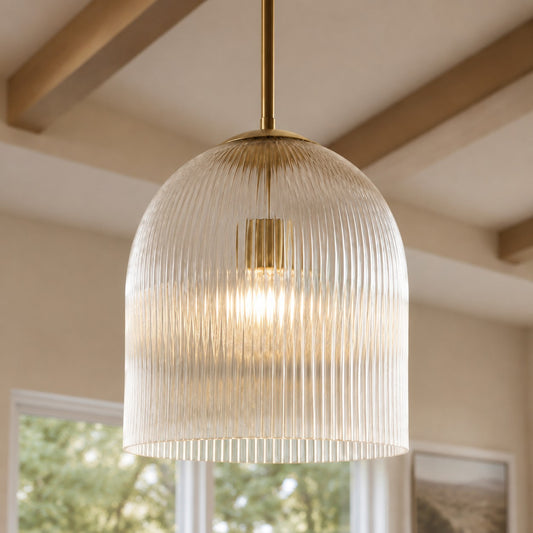
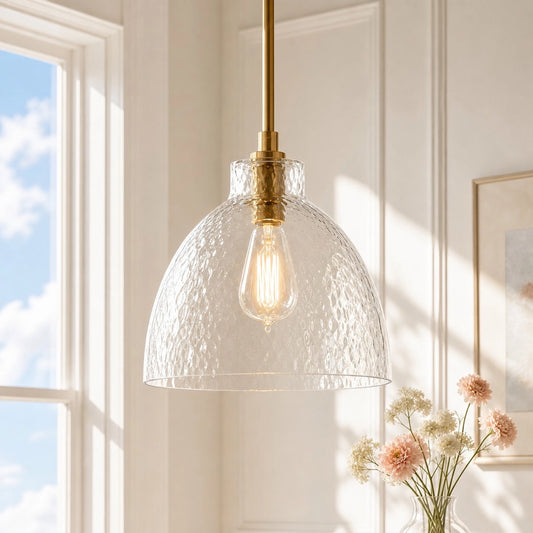
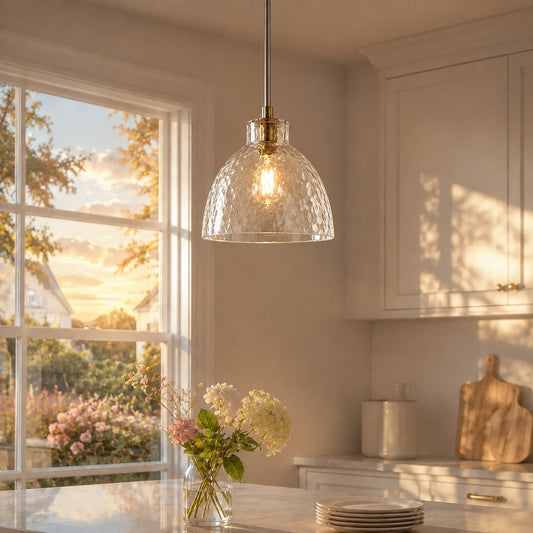

Interior designers rarely begin with the prettiest ceiling light. They begin with the room: ceiling height, furniture plan, daylight, surfaces, circulation, and the tasks that happen after dark.
A successful fixture must fit the architecture, distribute useful light, feel proportionate from several viewpoints, and remain practical to dim, clean, relamp, and install. Style is the final filter, not the first.

1. The Ceiling and Furniture Plan
Designers mark the fixture center from the furniture zone and walking route rather than copying the center of the room. In connected spaces, The Best Ceiling Lighting Combinations for Open-Concept Living and Dining Spaces shows how living and dining fixtures can serve separate zones without looking disconnected.
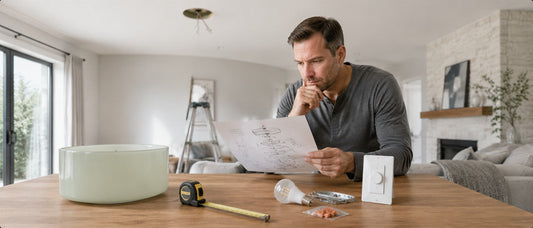
They record finished ceiling height, installed fixture depth, diameter, door and wardrobe movement, and whether people walk directly below. A full-size paper template often reveals scale problems before an order is placed.

2. Light Distribution and Glare
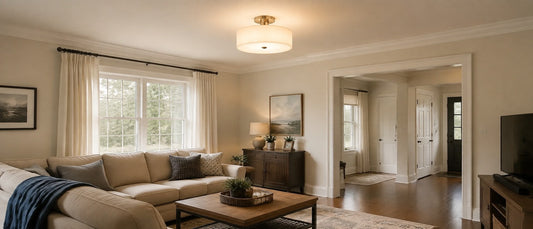
A broad diffuser, side glow, and some ceiling brightness usually feel calmer than one exposed bright point. The Evron Modern Drum Glass Semi Flush Mount Ceiling Light is useful to assess as a real example because its drum profile, textured glass, diffuser, and installed depth must be judged together rather than by category name alone.
Designers check the fixture from the sofa, doorway, dining chair, bed, and floor areas used by children or exercise. If the bulb or brightest opening is visible from a normal position, the specification needs another diffuser, lamp, or mounting choice.
3. Scale From More Than One Viewpoint

Diameter is compared with the furniture group below, while depth is compared with ceiling height and circulation. A fixture can be physically shallow but visually heavy if it is dark, opaque, or too detailed for the room.
4. Color Temperature and Color Rendering
Designers compare color temperature with timber, stone, paint, and textiles, then check whether the light renders those surfaces convincingly. The Illuminating Engineering Society definition of CRI is helpful because CRI is a color-rendering metric, not a complete promise that every material will look natural.
Samples should be viewed under the actual lamp or integrated LED specification. A warm room can still look flat when the source renders reds, skin tones, timber, or food poorly.

5. Material, Finish, and the Rest of the Interior
A ceiling light should support the largest surfaces rather than introduce an unrelated finish. Common Interior Design Mistakes When Mixing Natural Materials provides a hierarchy for deciding whether stone, wood, glass, or metal should lead.
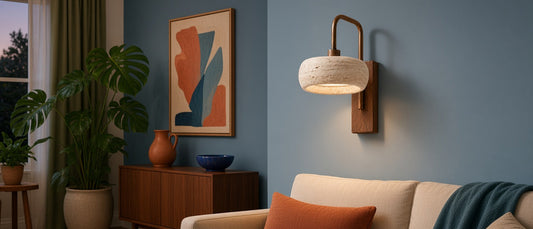
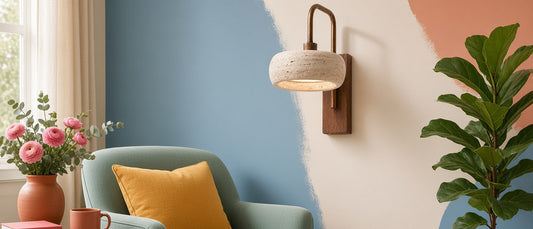
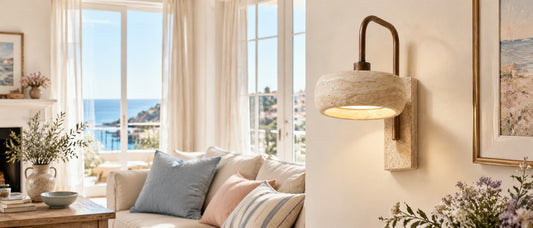
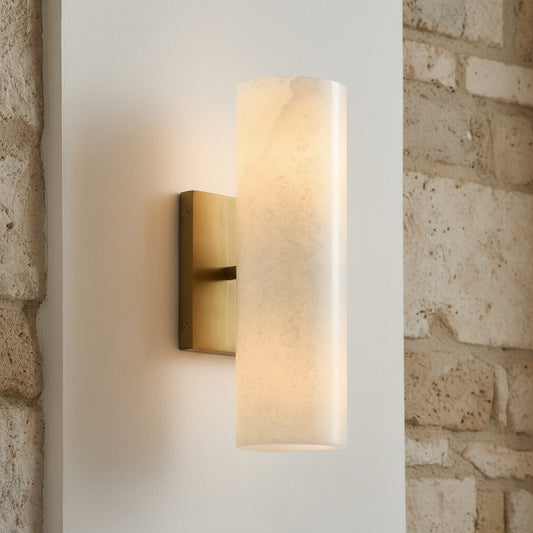
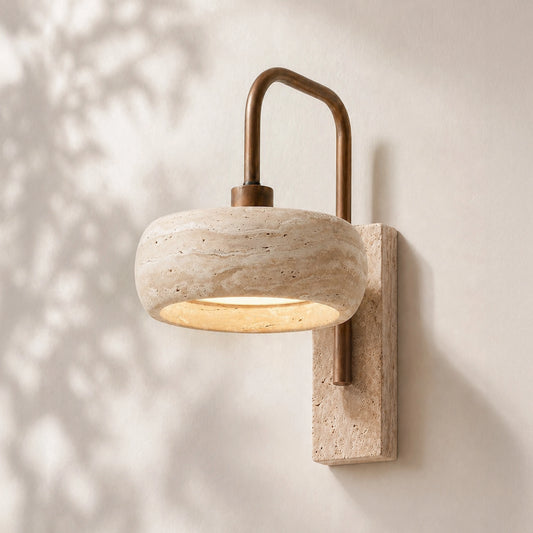
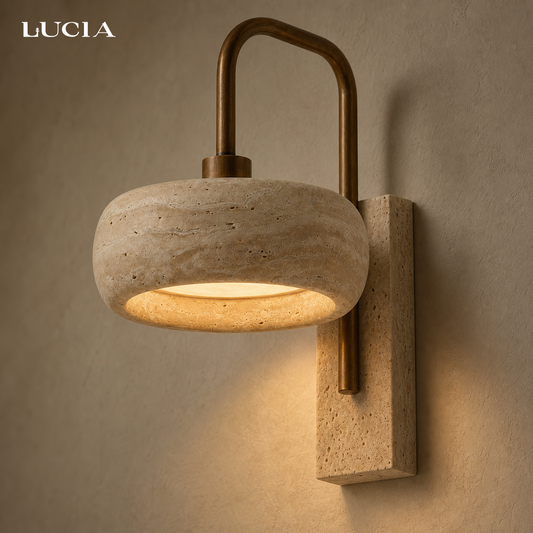
When a room needs a separate eye-level material accent, a restrained travertine wall light can support the ceiling layer without forcing both fixtures to share the same shape.
6. Controls, Maintenance, and Installation Risk

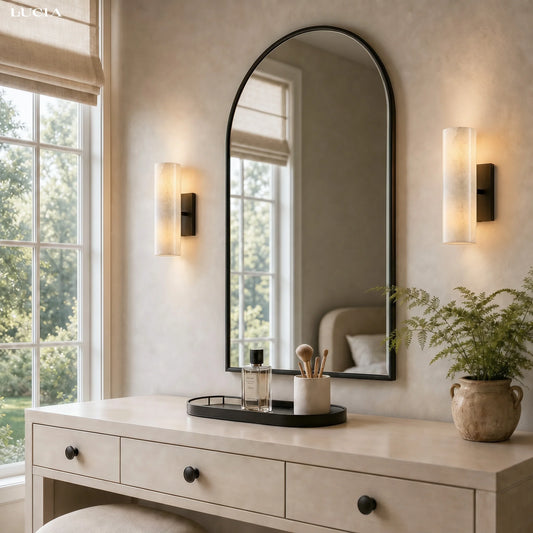
Designers confirm dimmer compatibility, driver access, bulb base, replacement method, shade removal, cleaning reach, ceiling-box support, canopy size, lead time, and return terms. When the room also needs eye-level light, review Tavik as the supporting wall layer only after the ceiling specification is stable.
The Designer Shortlist Test
Keep only fixtures that pass four questions: Does it fit the architecture? Does it put light where the room needs it? Does it improve the material and furniture plan? Can it be installed and maintained without fragile assumptions?
If a shallow drum fixture passes those checks, review Evron's full dimensions and diffuser details before confirming the final ceiling position and control plan.
FAQ
Do interior designers choose style or brightness first?
They usually establish room function, distribution, glare control, and scale before using style to narrow the final options.
Is a high CRI number enough to choose a light?
No. CRI is useful, but color temperature, spectral quality, diffusion, glare, and the actual room materials also affect the result.
Why do designers ask for installation drawings?
Product photos do not show the exact mounting point, canopy coverage, lowest finished depth, support requirements, or service access.
Tags:
Vorherige
The Best Ceiling Lighting Combinations for Open-Concept Living and Dining Spaces
Nächste
Common Interior Design Mistakes When Mixing Natural Materials