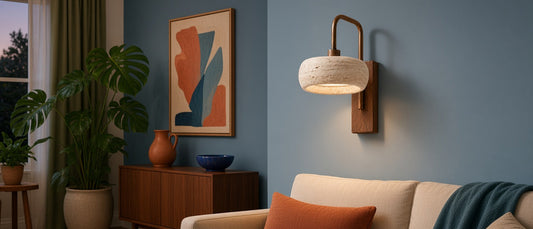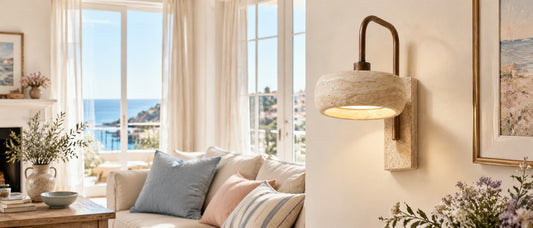
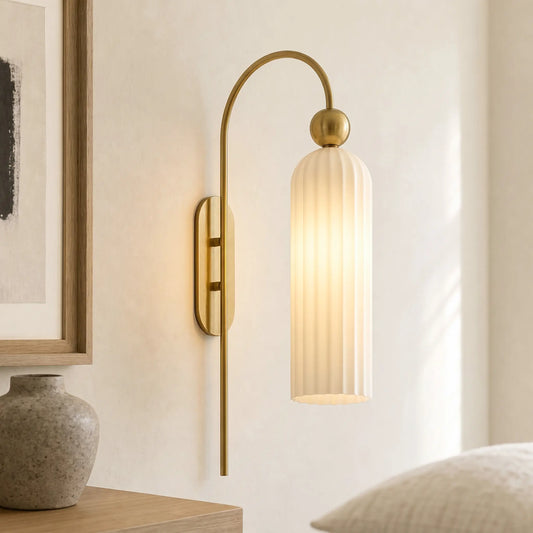
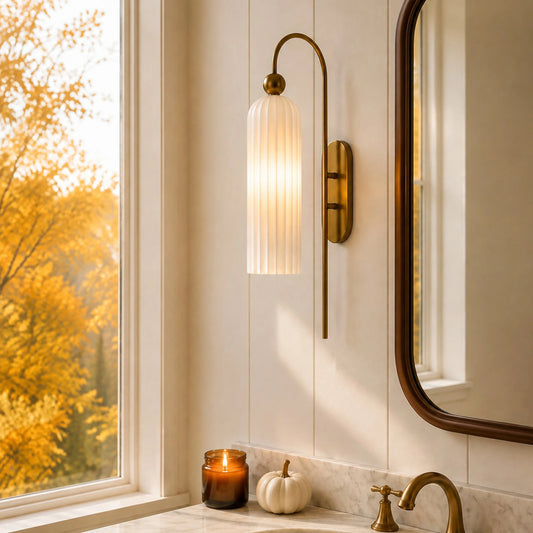
Completed American entry wall with a stone-and-wood sconce, artwork, console, and enough clearance for everyday movement.

Knowing how to light a reading corner is less about creating a decorative glow and more about putting useful light on the page without exposing the brightest part of the fixture to your eyes. Start with the chair and reading posture, then position the wall light.
A calm corner also needs a little background light, an easy-to-reach control and enough clearance to sit, stand and set down a book. Natural materials can soften the setting, but comfort still depends on beam direction and glare control.
Quick Answer: Design from the Seated Position

Sit in the exact chair with a book at your natural reading height. Mark your eye, shoulder, and hand reach on a temporary paper strip. The useful sconce position is the one that lights the page, hides the brightest source from normal view, and allows you to operate the switch without twisting.
Generic wall-light height is only a starting point. Chair depth, back height, arm position, shade shape, projection, and whether you read upright or reclined all change the answer.
Run a Seated Glare Test Before Choosing Style
Check the page, not just the wall
Place a temporary lamp near the proposed wall position and observe whether the page is evenly visible. A dramatic glow on the wall can still leave the book in shadow if your shoulder or chair back blocks the useful light.
If the same wall also makes the room feel visually shallow, How Decorative Wall Lights Create More Depth in Small Spaces explains how vertical light changes depth.
Lighting-forum discussions often separate a photogenic wall glow from useful page light. Hold a temporary lamp at the proposed position and read for ten minutes; if your shoulder shadows the book or the source catches the other person's eye, change the angle before changing the decor.
Hide the brightest point from the eye
Look forward, down at the page, and toward the side table. If the bulb or brightest opening enters normal vision, change the height, lateral position, shielding, or fixture type. Do not rely on a dimmer to correct an exposed source.
Test both readers when the chair is shared
Different seated heights and reading habits can change the glare angle. Test the tallest and shortest regular user before wiring, then choose the position that protects both or use a fixture with suitable directional control.
Once the page-light and seated-glare tests are clear, use Tavik's listed size and projection as a real mock-up reference beside the chair. Reach, eye line, and circulation have already defined what the product must do.
Use a Three-Point Layout: Chair, Table, and Sconce

Treat the chair, side table, and wall light as one working triangle. The table should support a book or drink without forcing the chair away from the light. The switch should be reachable from the seated position, and the fixture should stay clear when someone rises or reaches sideways.
- Place the chair first and test its real recline and rotation.
- Keep the side table close enough to use without crowding the armrest.
- Mock up the complete sconce outline and projection at the proposed wall position.
- Open nearby curtains, doors, and storage before approving the layout.
Separate Task Light from Ambient Light

The sconce should help the page, while a softer ambient source keeps the surrounding wall and floor visible. When the reading light is the only bright object in a dark room, eye comfort can suffer and the corner may feel isolated rather than calm.
If the chair is not the real anchor, use What to Put on an Awkward Empty Wall: When a Wall Sconce Actually Works to diagnose the empty wall before committing to wiring.
Use enough contrast to define the reading zone without turning the whole room amber or leaving the background black. Confirm the exact fixture's light distribution, lamp compatibility, color temperature, and control options before purchase.
Let Natural Materials Support the Light

Natural materials can soften a technical task because they respond to light with texture rather than glare. Travertine, timber, linen, wool, matte plaster, and unglazed ceramic can share a warm, quiet character when their tones are related but not identical.
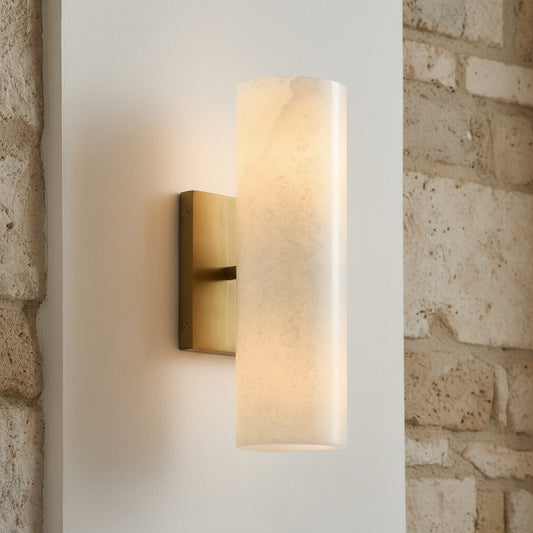
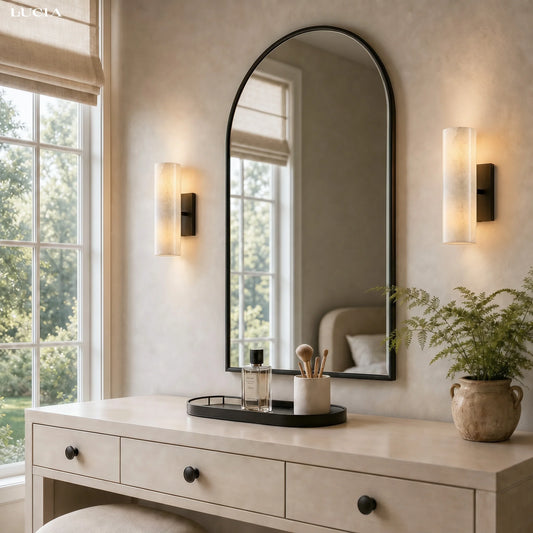
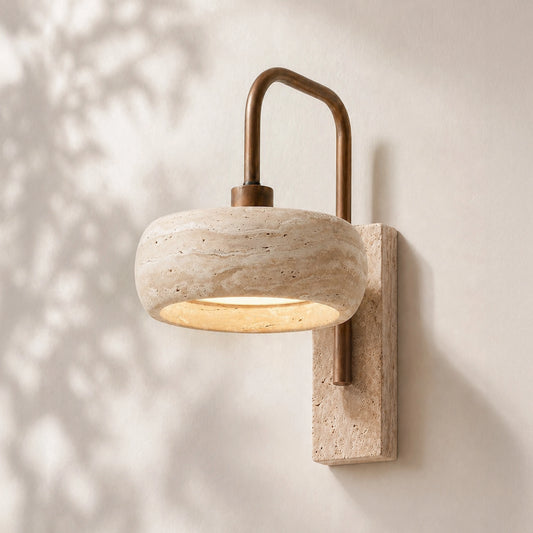
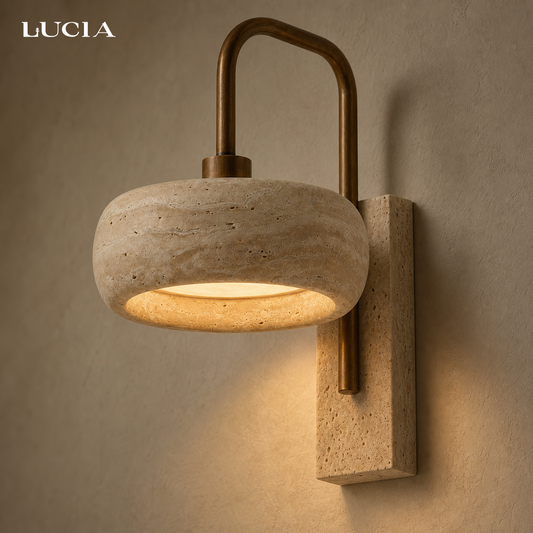
Tavik's travertine-and-wood cylinder is approximately 20 x 36 x 27 cm and is designed for soft ambient light. Because the listed LED source is included and non-dimmable, it should be tested as part of a layered plan rather than assumed to be the only reading task light.
The Tavik Vintage Rustic Travertine Stone Cylinder Wall Sconce can provide a vertical stone accent beside an upholstered chair and wood table. Treat the natural variation as the lead texture, then keep nearby patterns and polished surfaces restrained. Verify the current product details and make a full-size template before fixing the layout.
Do Not Force a Reading Corner onto the Wrong Wall
A leftover wall is not automatically a useful reading location. Reject it if the chair blocks circulation, daylight creates screen or page glare, a door swings into the zone, the switch cannot be reached, or the fixture sits directly beside the reader's face.
A Ten-Minute Reading-Corner Mock-Up

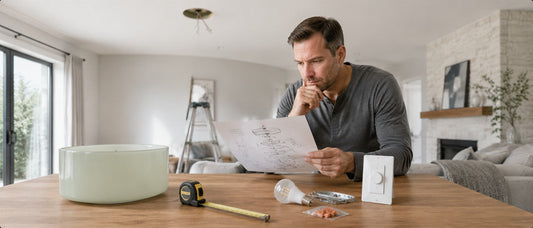
Tape a full-size fixture outline to the wall and build its listed projection with a lightweight box. Sit with a real book for ten minutes at night. Reach for the switch, turn a page, lean back, stand up, and place a cup on the table. Ask another regular user to repeat the test.
The mock-up passes only when the source stays out of normal vision, the page receives useful light, the fixture clears movement, and the corner remains easy to enter and leave. Style comes after those conditions, not before them.
Review Tavik before planning installation
Frequently Asked Questions
How do you create a cozy reading corner?
Place the chair first, add a reachable table and test the page light from the actual seated position. Then use wood, stone, linen or wool for warmth while keeping the route, switch and book storage easy to use.
What is the best light for a dark reading corner?
Use a shielded or diffused task light that reaches the page, plus softer ambient light so the surrounding room does not disappear. Decorative wall glow alone may not provide enough useful illumination for reading.
Where should a reading wall light be placed?
Position it beside or slightly behind the reading shoulder so the beam reaches the page without the bulb or brightest opening entering normal vision. Test both regular readers before fixing the height and lateral position.
How can I read at night without disturbing someone else?
Use a controlled, localized beam, keep the source below the other person's direct sightline and reduce background contrast with one low ambient light. Separate controls are more useful than making the entire room dim.
Tags:
Vorherige
How Decorative Wall Lights Create More Depth in Small Spaces
Nächste
What to Put on an Awkward Empty Wall: When a Wall Sconce Actually Works