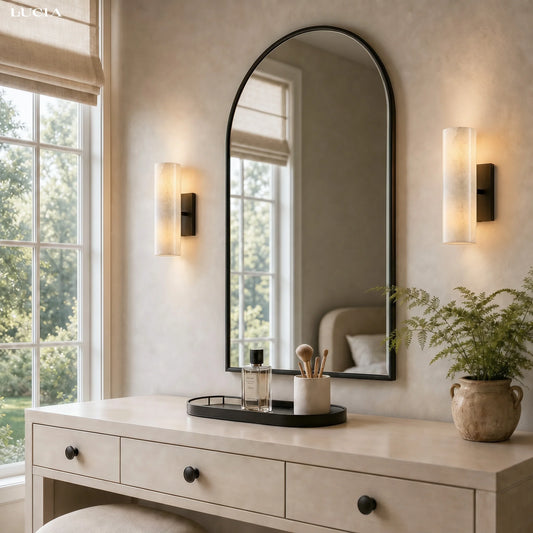
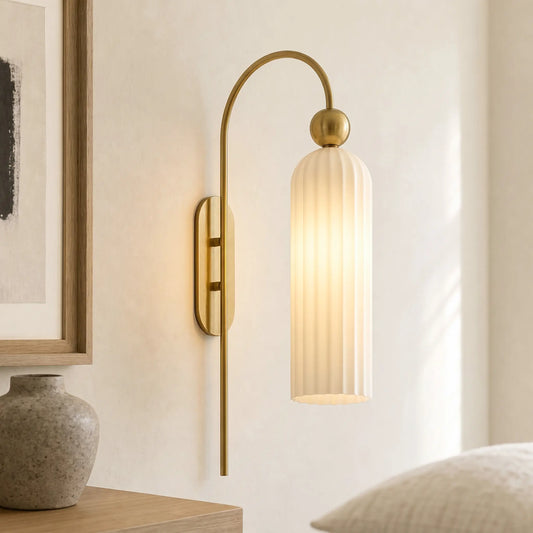
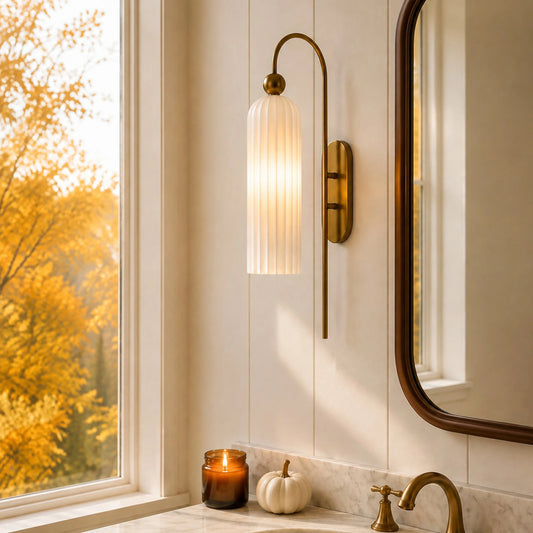
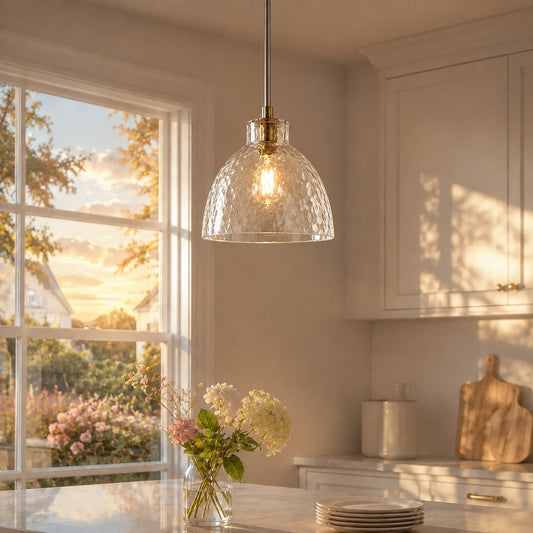

Natural materials make a room feel warmer only when their color, texture, scale, and maintenance needs work together. The common failure is not using too many materials; it is giving every material equal visual weight.
A reliable starting point is one dominant material, one supporting material, and one small accent. Apply that hierarchy across floors, furniture, walls, textiles, hardware, and lighting rather than treating each purchase as a separate decision.

Mistake 1: Letting Every Natural Material Become a Feature
A stone floor, veined table, slatted timber wall, woven rug, and textured lights can all be attractive alone but exhausting together. If the lighting zones also need coordination, The Best Ceiling Lighting Combinations for Open-Concept Living and Dining Spaces helps decide which fixture should lead and which should stay quiet.
Fix it by choosing the surface people should notice first. Repeat quieter versions of its warmth or texture elsewhere, then remove any accent that does not support the hierarchy.
Mistake 2: Matching Color While Ignoring Undertone

Two beige materials can still clash when one reads pink, another yellow, and a third grey. Compare samples in daylight and under the bulbs you will actually use. Warm wood and travertine usually need a different supporting white than cool marble or blue-grey stone.
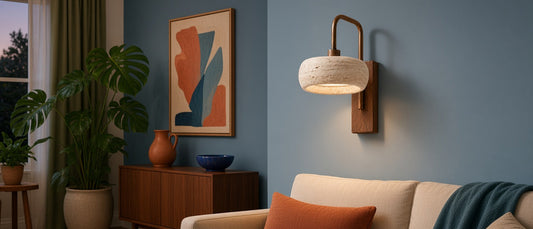
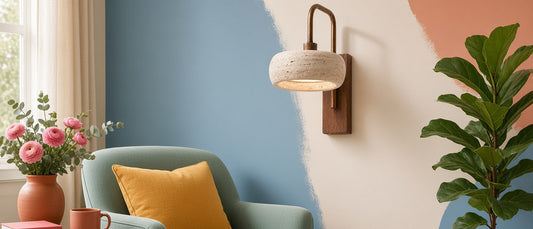
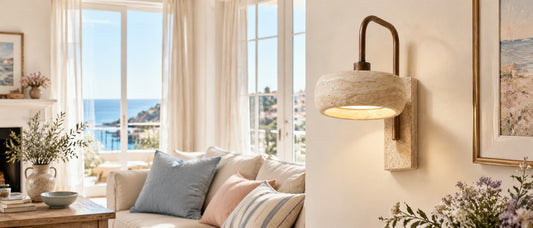
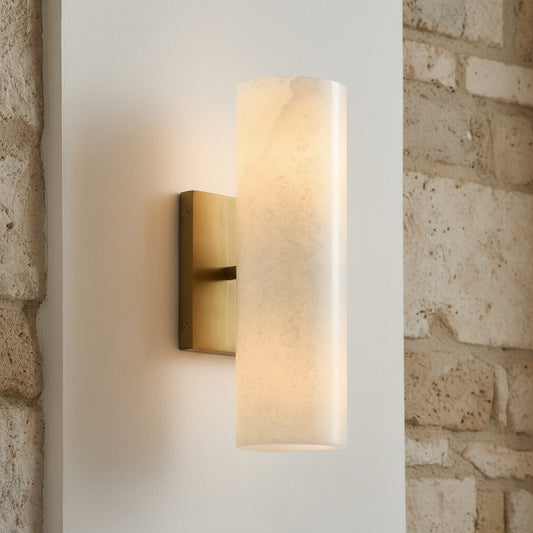
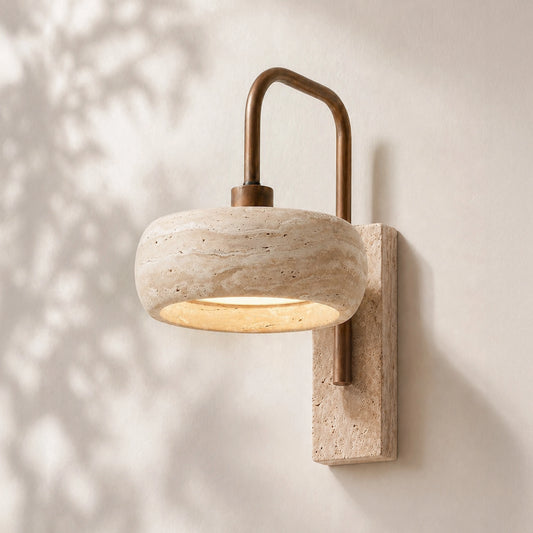
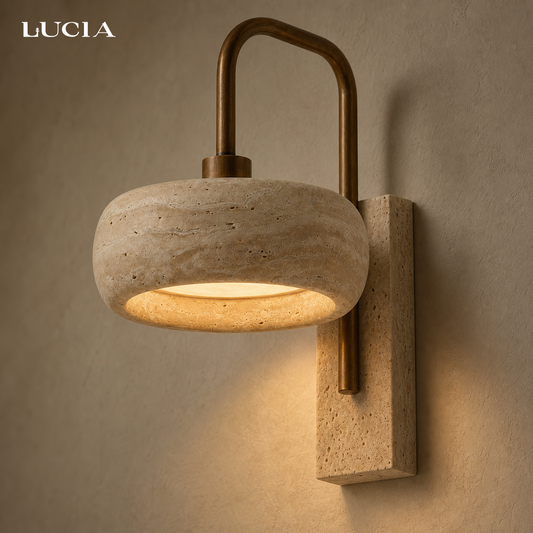
When the wall needs a controlled natural focal point, the Tavik Travertine Cylinder Wall Sconce can act as the stone accent while smoother furniture and ceiling finishes remain secondary.
Mistake 3: Treating Natural Variation as a Defect
Travertine is a form of terrestrial limestone, and its visible cavities and banding are part of the material's formation. The concise Wikipedia overview of travertine is useful background before judging whether natural variation suits a highly controlled room.

Ask for current product photography or a representative sample when variation matters. Do not expect two stone pieces to copy each other exactly, but do confirm the acceptable color range and finish.
Mistake 4: Repeating the Same Texture at the Same Scale
A heavily grained floor, ribbed cabinet, woven wall panel, and rough stone light all compete because every texture is read from the same distance. Vary the scale: one broad grain, one fine tactile surface, and one restrained detail.
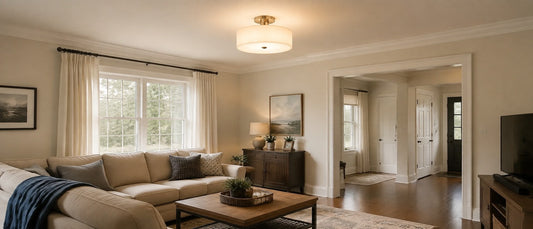
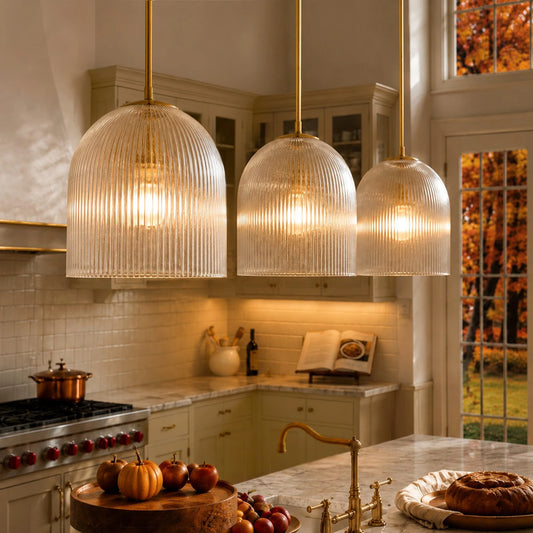
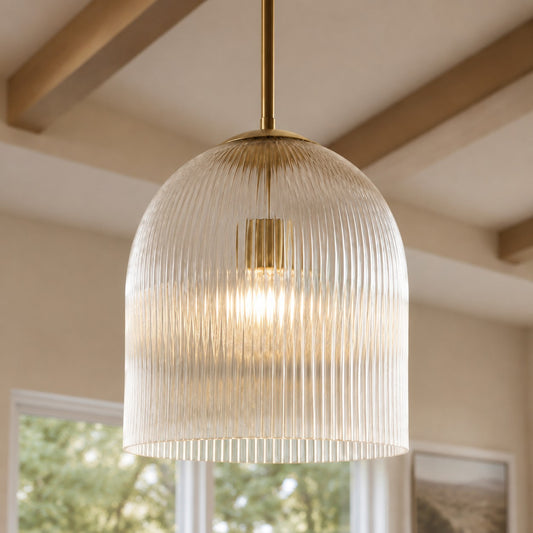
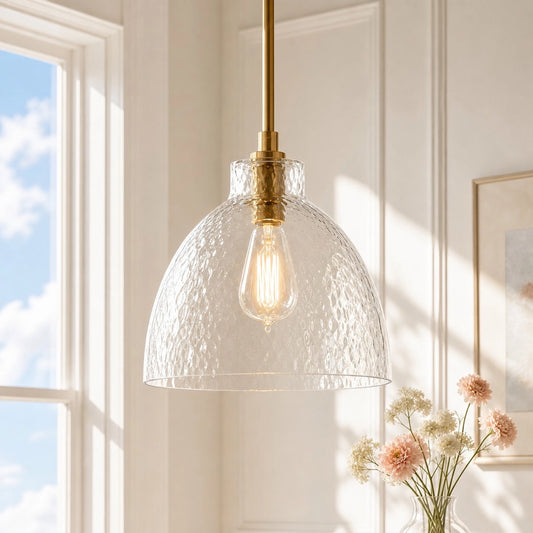
When the wall already carries tactile stone or wood, keep the overhead layer smoother and visually quieter. The Evron Modern Drum Glass Semi Flush Mount Ceiling Light can be assessed for that role because its broad drum profile and textured glass create a different visual scale from a close-up stone accent.

Mistake 5: Choosing Materials Before Considering Maintenance
Porous stone, unfinished wood, pale grout, polished metal, and textured fabric age differently. Check splash risk, sunlight, dust, cleaning products, and how often the surface will be touched before using a material in a demanding location.
Mistake 6: Leaving Lighting Until the End
Light changes how stone veining, timber warmth, and metal reflectivity appear. What Interior Designers Look for When Choosing Ceiling Lighting for Modern Homes explains how designers test brightness, glare, color rendering, and fixture scale before approving the material palette.

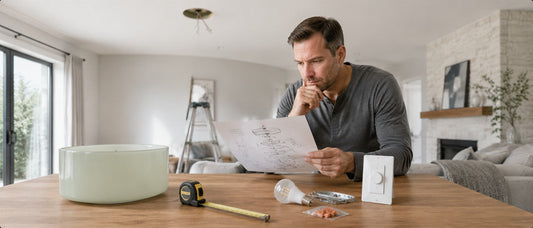
View samples under the planned color temperature and at evening brightness. If a broad diffused ceiling layer suits the room, review Evron's diffuser, compatible lamp, and dimming requirements against the actual wood, stone, fabric, and paint samples before finalizing the palette. A combination that works only in daylight is not finished.
A Room-by-Room Material Formula
In a living room, let the floor or largest furniture piece lead. In a bedroom, let textiles soften one hard natural surface. In a hallway, limit the palette because every finish is seen in one narrow sightline. In each case, lighting should reveal the materials rather than introduce another competing pattern.
If a warm stone accent completes the hierarchy, see Tavik within the final material palette after checking the room in both daylight and evening light.
FAQ
How do I know if a room has too many natural materials?
The room has too many when no surface clearly leads, the eye has nowhere to rest, or several strong textures compete at the same scale. Choose one dominant material, one supporting material, and restrained accents; then remove any finish that does not repeat an undertone or solve a practical need.
Can I mix different wood tones in the same room?
Yes. Start with the fixed or largest wood as the dominant tone, then compare the others for warm, cool, or neutral undertones under the room's actual lighting. Repeat a secondary tone deliberately instead of introducing several unrelated one-off finishes.
Why can natural materials look different from the product photos?
Stone veining, wood grain, and textured glass naturally vary, while camera exposure, white balance, screen settings, and room lighting can change their apparent color. Before buying, request current product photos or a sample, confirm the acceptable finish and color range, check exact dimensions, and review return and restocking terms. Compare any sample in daylight and under the bulbs you will use at night.
Tags:
Previous
What Interior Designers Look for When Choosing Ceiling Lighting for Modern Homes
Next
Bathroom Vanity Lighting: Side Sconces or Overhead?