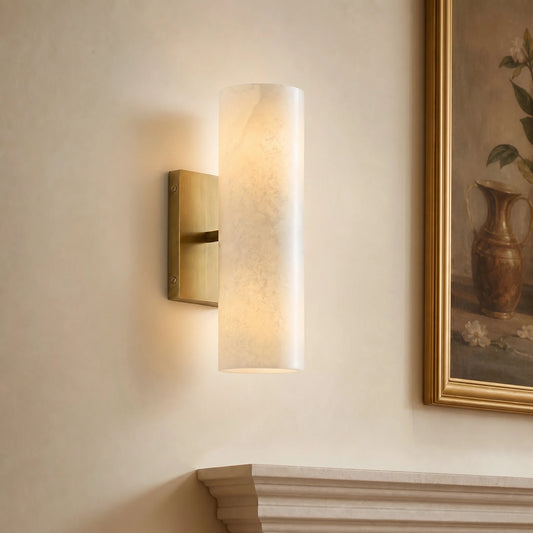
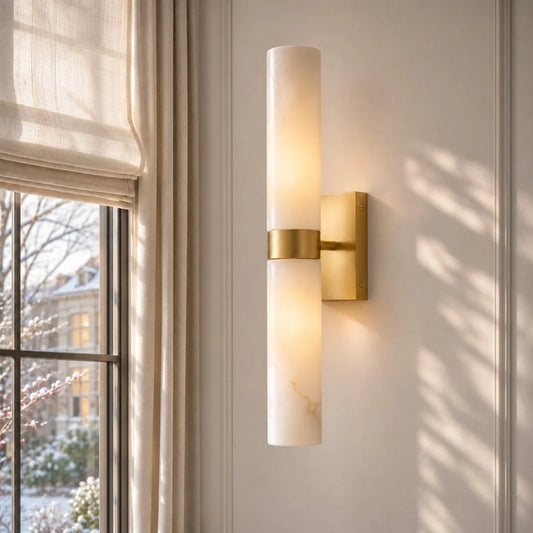

Most wall lights explain themselves with the switch off. You see an arm, a shade, and the place a bulb will sit. A stone tube does not. By day it can rest on the wall like a pale column. Switch it on, and the light is in the stone.
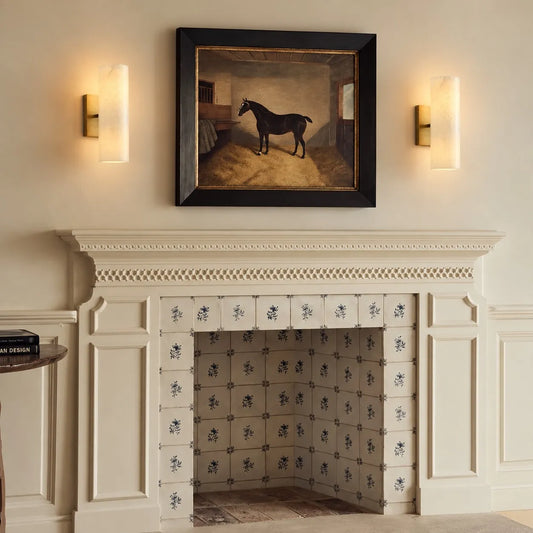
Doran makes that difference easy to see, if you compare the photographs rather than the outline. Unlit, the alabaster is a cream cylinder on a dark bronze plate, almost solid. Lit, the clouding in the stone becomes the glow. The page calls this a softer presence. A product grid can only show you the silhouette. The change after dark is the reason the material matters.


The front view hides the depth
A front-facing picture is kind to a tube. Width reads first. On the published alabaster specification, that width is 4 in, and the height is 13 in. The third number is the one a front view underplays: 6 in from the wall. Depth is the projection.
Six inches will not trouble a wide living room. A narrow hall, a doorway, or the path past a bed will notice it.
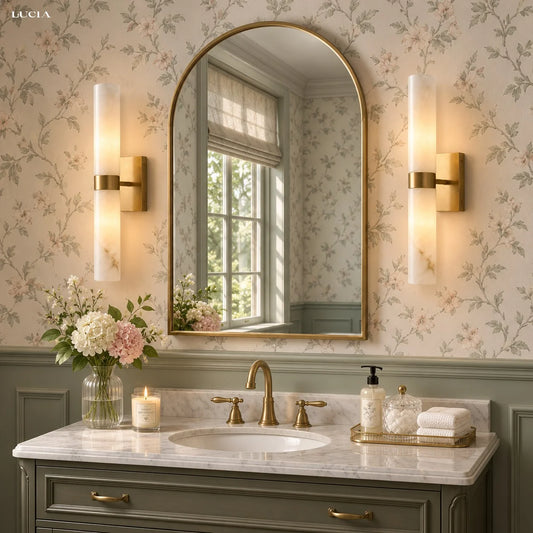
The side views show the hardware a front picture hides. A short arm joins the tube to a rectangular backplate. Beside the mirror, metal stays quiet and the stone does the illuminating. There is no separate shade around a bulb you can see. The material is the diffuser.
Resin copies the outline only
The page draws a line that a lot of listings blur. Many fixtures that look like alabaster are resin. This one uses natural alabaster, and it treats the veining as part of the material, not a defect. No two shades are identical.
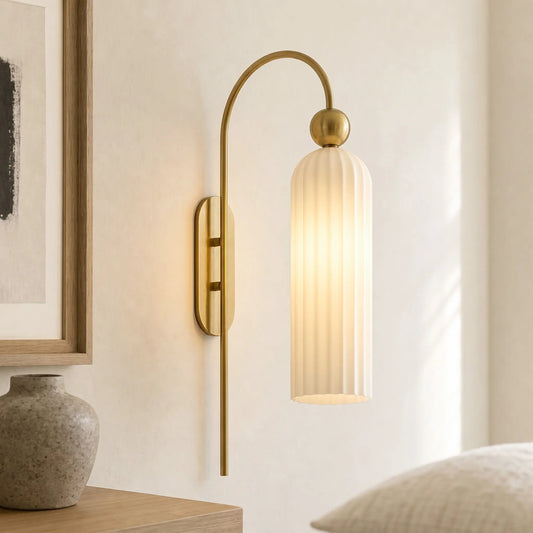
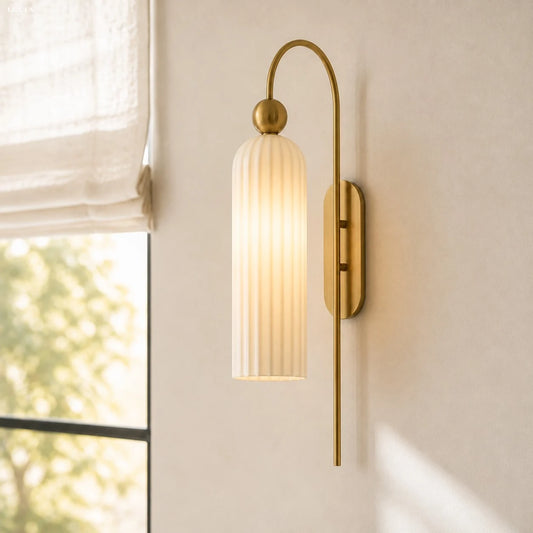
Decide that before a pair arrives. Two sconces can share a material and a finish — brass, bronze, or chrome — without sharing a pattern. Travertine brings pores. Marble brings its own lines. If the room needs two columns that match, glass is the calmer choice: ribbed glass for clear vertical flutes, milk glass for a smooth white glow, frosted glass for a softened surface.
The Shift from Functional Lighting to Emotional Lighting Is Changing Modern Interiors asks the broader version of this. A fixture can be bright enough and still feel wrong, because the material changes how light meets the eye. Stone that carries the light is a different event from a shade that hides a bulb.
One veined tube can be the accent. Three of them, against a plain wall, can still be. Common Interior Design Mistakes When Mixing Natural Materials names the failure: giving every texture equal weight. In the stair photograph, the variation stays in the light. A veined floor and a busy painting do not have to join in.

The nightstand is already full
Not every wall needs one. In the bedroom photograph, the nightstand is already occupied: a book, glasses, a cup, a small plant. The tube sits on the wall above that surface, and daylight from the window is the brighter source. The sconce has not won the room. It has taken a job the tabletop cannot spare room for.

Why Your Bedroom May Need Wall Lighting Instead of Another Table Lamp is the comparison to read before treating a wall light as an automatic upgrade. The product page says alabaster filters light gently, without harsh glass glare, and it mentions bedside reading. It does not describe a directed beam. Sit where you would read. If the open end of the tube meets your eyes, the height is wrong, however good the stone looks from the doorway.
A single tube can also keep a wall from going blank beside art, a console, or a mirror. It should not be asked to decorate a wall that wanted to stay empty. What to Put on an Awkward Empty Wall: When a Wall Sconce Actually Works makes the same distinction. A sconce earns its place when the wall is missing light, or a relationship to something already there. A chair, a picture, a landing. Not a blank stretch that was fine.
Same silhouette, different light
One tube. Six shade materials. Three metals. Within a shade, the listed price does not change between brass, bronze, and chrome. The shade is the choice that changes both the light and the listed price. Glass sits lower. Alabaster, travertine, and marble sit above it. Confirm the live figure before you treat any sale price as a specification.
Each fixture takes two E12 bulbs. They are not included. The published wattage is 40W; confirm the marking on the fixture you receive before buying bulbs. Two sconces means four bulbs. The connection is hardwired, not plug-in, and the page asks for a qualified electrician.
Mounting can be vertical or horizontal. The guide shows the vertical tube. Turned sideways, the 13 in length runs across the wall. The drawings are examples of scale, not a plan to copy: one sconce over a 24 in console, a pair around a 36 in mirror, or a longer run compared at 48–72 in between centers. Measure the walkway. Do not inherit the drawing.
4 in Width
6 in From the wall
13 in Height
2 x E12 Bulbs, not included
Judge the tube by the material after dark, and by the inches it takes out of the walkway. Glass will give you the outline with a more even surface. Alabaster will give you a column that looks settled until the bulbs are on. The other shades share the collection silhouette. These dimensions are the published alabaster size. Confirm the option you select on the Doran tube sconce.
What the glow does not answer
Why does it look so different switched off?
Unlit, the alabaster reads as a cream column. Lit, light filters through the stone and the veining becomes part of the glow. The page treats that variation as natural, not a defect.
Will two stone shades match?
Not exactly. A pair can share the material and the metal. Natural alabaster, travertine, and marble still vary in veining, pores, and color. Glass is the more even choice if matching matters.
How far does it come off the wall?
The published alabaster size is 4 in wide, 6 in deep, and 13 in high. Depth is the projection. Other shades share the silhouette; confirm the option you select. Horizontal mounting uses the 13 in length across the wall.
Is the alabaster easy to clean?
Wipe gently only with a dry soft cloth. Water, spray cleaners will damage the natural stone.
Tags:
Vorherige
When a Quiet Wall Needs Just One Statement Light: Art Deco Glass Bar
Nächste
How to Mix Vintage Glass Lighting With a Modern Dining Room