
In the world of interior design, minimalism is often misunderstood as simply "having less stuff." But as anyone who has tried to style a Nordic-inspired home knows, minimalism is actually about intentionality. Every curve, every line, and every lumen of light needs to justify its existence. This brings us to one of the most common debates I encounter in my consultations: Should you install a pendant light or a flush mount?
It might seem like a purely functional decision based on ceiling height, but the choice between these two fixtures dramatically alters the psychology of a room. A flush mount recedes, creating openness, while a pendant demands attention, creating intimacy. Let’s dive deep into the mechanics and aesthetics of both to help you make the right call for your space.
The Case for Flush Mounts: The Invisible Heroes
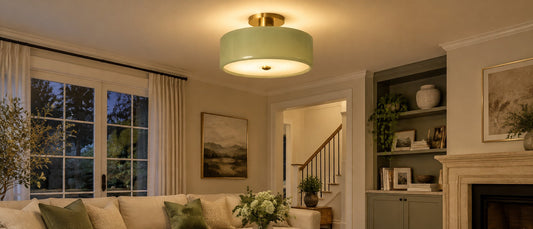
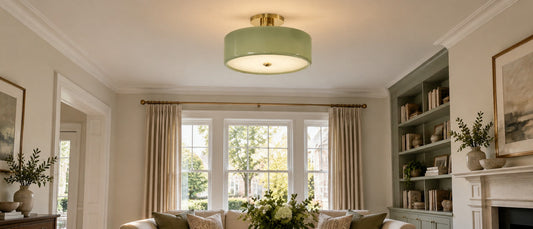
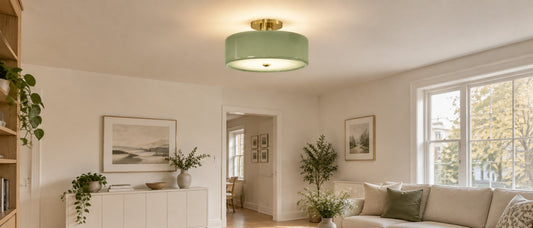
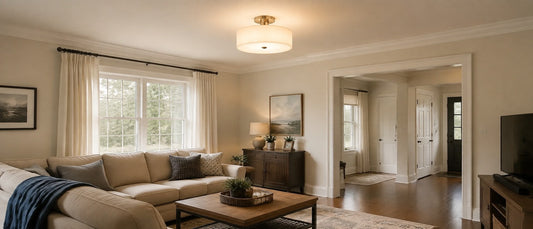
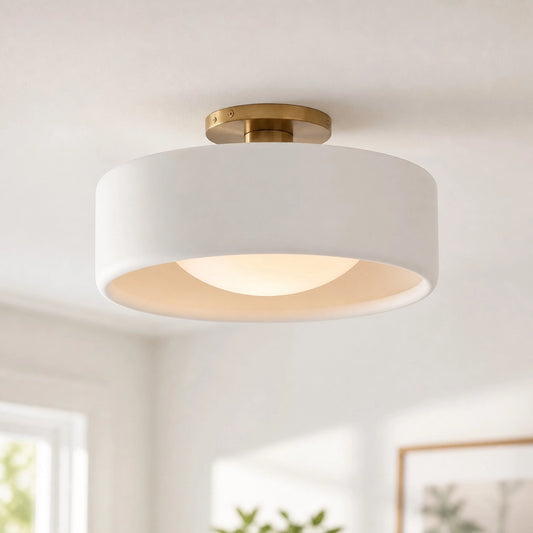
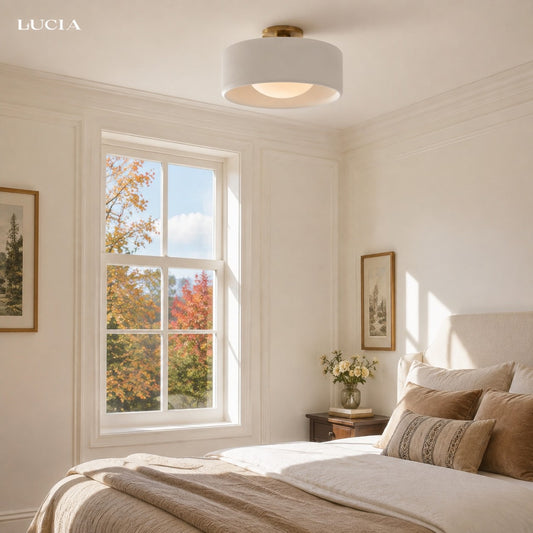
Flush mount lighting fixtures sit directly against the ceiling, leaving no gap between the light and the drywall. In the early 2000s, these got a bad reputation for looking like "boob lights," but modern design has completely reinvented them. In a minimalist home, the flush mount is the silent workhorse.
1. Visual Continuity
The primary goal of minimalism is to reduce visual noise. Because flush mounts hug the ceiling, they keep the vertical space entirely open. If you have a room with a lot of horizontal activity—like a living room with a large sectional, a coffee table, and a media console—a flush mount ensures the room doesn't feel "top-heavy." It draws the eye upward but doesn't trap it there, allowing the gaze to travel smoothly across the room.
2. The "8-Foot" Rule
Standard American ceiling heights hover around 8 feet. If you hang a pendant light in a high-traffic walkway with an 8-foot ceiling, you are inviting head bumps and visual clutter. Flush mounts are the only logical choice for hallways, walk-in closets, and bathrooms where clearance is key.
3. Ambient vs. Focused Light
Flush mounts are generally designed to cast light wide and far. They are "generalists," providing the ambient light needed to clean, play, or move around safely. However, they rarely offer the moodiness or "hygge" feeling that is central to Nordic design.
The Case for Pendant Lights: The Art of Zoning
Pendant lights hang down from the ceiling on a cord, chain, or rod. In a minimalist context, the pendant light is often the only "jewelry" a room wears. It acts as an anchor.

1. Defining "Micro-Rooms"
Open-concept living is standard in modern homes, but it can lead to a space feeling like a confusing warehouse. Pendants are the best tool for "zoning." By hanging a light fixture lower over a specific area—say, a dining table or a kitchen island—you create a "room within a room" without building walls. The pool of light creates a psychological boundary that says, "Gather here."
2. Adding Vertical Texture
Minimalism runs the risk of feeling flat. If everything is low-profile and sleek, the room lacks drama. A pendant light introduces a vertical line that breaks up the monotony. This is where material choice becomes vital.
For example, the Nerys Nordic Minimalist Morandi Matte Metal Pendant Light is designed specifically for this purpose. Its sleek silhouette doesn't overwhelm a space, but the matte metal finish and subtle Morandi tones add a sophisticated layer of texture that a flush mount simply cannot achieve. It turns a light source into a sculpture.
3. Task Lighting Perfection
Unlike the scattered light of a flush mount, pendants offer directional, downward light. This makes them indispensable for task areas. Reading, cooking, and dining require light that focuses on the surface below, not the corners of the ceiling.
Room-by-Room Decision Guide
Still on the fence? Let’s walk through the typical American home and decide which fixture wins in each zone.
The Entryway
Winner: It Depends on Height.
If you have a double-height foyer, a cluster of pendants is a breathtaking way to welcome guests. It sets the tone immediately. However, for a standard apartment entryway, stick to a sleek, geometric flush mount to prevent the space from feeling claustrophobic immediately upon entering.
The Kitchen
Winner: Pendant Lights.
The kitchen island is the social hub of the home. Hanging two or three pendants here is non-negotiable for high-end design. It provides necessary task lighting for chopping veggies and creates a visual centerpiece.
Further reading:How to Choose the Perfect Dining Room Lighting

The Bedroom
Winner: A Hybrid Approach.
Traditionally, bedrooms use a central flush mount. While functional, it’s often unflattering. A modern minimalist trend is to remove the central light entirely and install low-hanging pendants on either side of the bed, replacing bedside table lamps. This frees up nightstand space and creates a boutique hotel vibe. The soft, directed glow of the Nerys Pendant Light in a calming sage or beige tone creates a serene atmosphere perfect for winding down.

The Dining Room
Winner: Pendant Lights.
A flush mount over a dining table looks lost and disconnected. A pendant light should hang 30 to 36 inches above the table surface, creating an intimate cone of light that highlights the food and faces of your guests, leaving the messy kitchen in the shadows.
Installation & Maintenance Realities
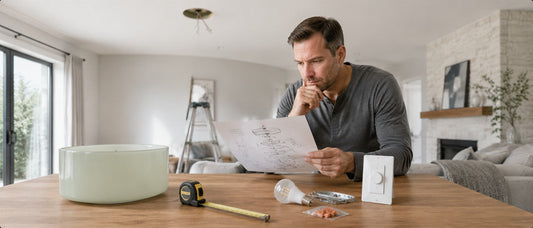
Before you buy, consider the upkeep. Flush mounts are generally "install and forget." They collect less dust on the visible surfaces, though bugs can sometimes get trapped inside the dome if it’s not sealed properly.
Pendants require a bit more love. Because they hang lower and are often at eye level, dust on the shade is more visible. However, choosing a high-quality matte metal finish (like the one found on the Nerys collection) rather than clear glass can hide dust better and is significantly easier to wipe down with a microfiber cloth.

Final Verdict
So, which one wins?
- Choose a Flush Mount if: Your ceilings are under 8 feet, you need general brightness for cleaning/safety, or your room is already visually "busy" with furniture and art.
- Choose a Pendant Light if: You want to define a specific zone (dining/sleeping/cooking), you need focused task lighting, or you want to add a distinct design element that elevates the room's aesthetic.
In the end, the best minimalist homes use a combination of both. Use flush mounts to do the heavy lifting of general illumination, and use statement pieces like the Nerys Pendant to add the character and warmth that turns a house into a home.
Further reading: Applications of Glass Pendant Lights in Modern Homes
Tags:
Previous
Glass, Metal, or Stone? Choosing the Right Material for Minimalist Lighting
Next
Sizing it Right: The Expert Guide to Choosing the Perfect Pendant Dimensions