
When most people think of Scandinavian design, they envision clean lines, white walls, and functional furniture. While these are certainly hallmarks of the style, the true "soul" of a Nordically-inspired home lies in its texture. Without a variety of tactile surfaces, a minimalist room can easily feel cold, clinical, or unfinished. In the design world, we use texture to bridge the gap between "simple" and "stark."
For those living in modern apartments or homes where architectural details might be limited, texture is your most powerful tool for creating a sense of history and comfort. By layering different materials—from rough-hewn stone to soft wool—you invite the eye to linger and the body to relax. This is the essence of "Hygge," the Danish concept of coziness and contentment.
Why Texture Matters in a Neutral Palette
Scandinavian interiors typically rely on a restricted color palette of whites, grays, and soft earth tones. When color is removed as a primary source of visual interest, texture must take its place. If every surface in a room is smooth and reflective (like glass or polished metal), the space lacks "visual weight."

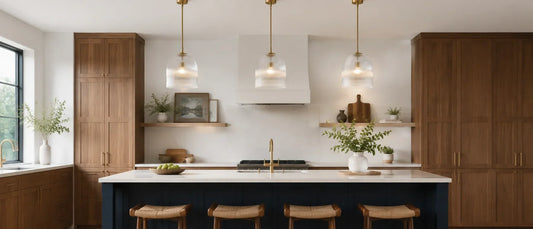
By introducing varied textures, you create shadows and highlights that give the room dimension. A matte wall contrasted with a woven rug and a stone light fixture creates a sophisticated interplay of light. Further reading: Pendant vs. Ceiling Lights in Minimalist Home Design
Natural Stone: The Anchor of Tactile Design
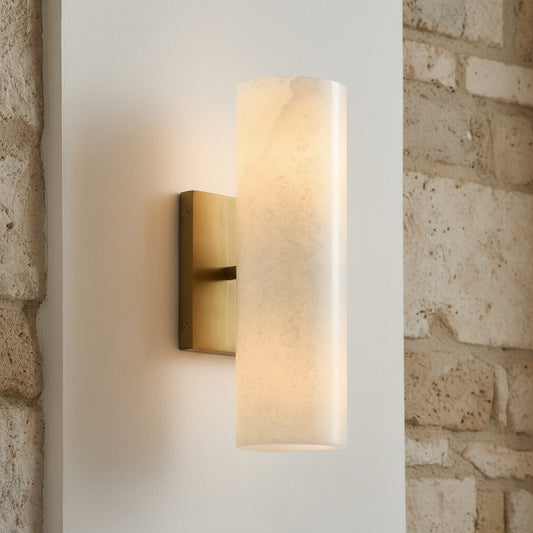
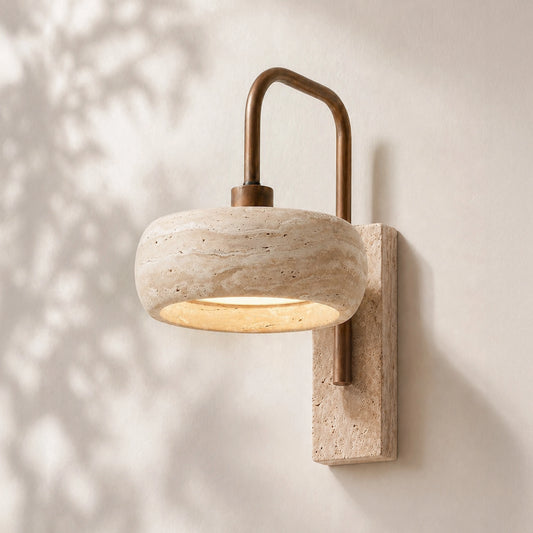
One of the most significant trends in Scandi-style interiors is the integration of "raw" natural materials. While wood has always been a staple, designers are now turning to natural stones like travertine to ground their spaces. Travertine is unique because it is inherently textured; its surface is characterized by small pits and variations that tell a story of geological time.
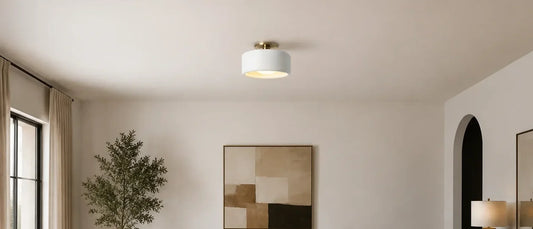
Incorporating stone through lighting is an excellent way to introduce this texture without committing to a full renovation. The Kairi Scandinavian Travertine Round Ceiling Light serves as a perfect textural anchor. Its porous, matte surface provides a soft, organic contrast to the flat expanse of a ceiling, instantly making the room feel more curated and expensive.
The Interaction of Light and Surface
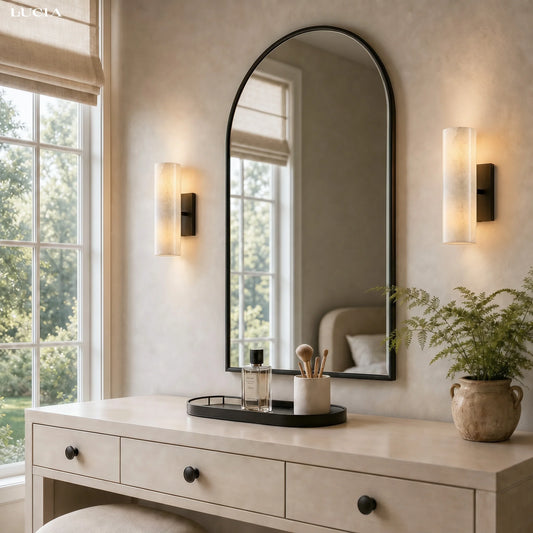
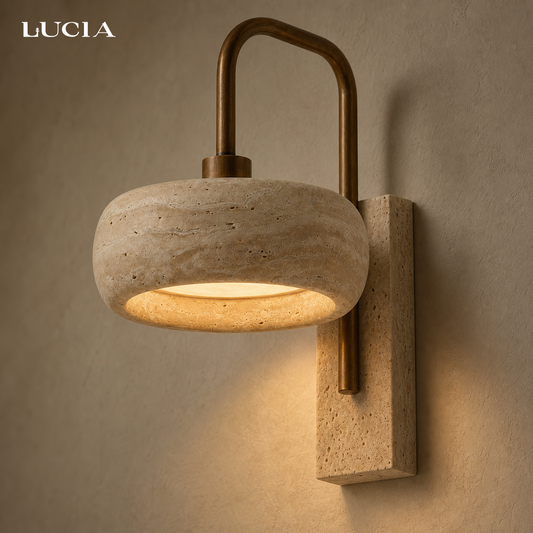
Texture is not just something you feel with your hands; it’s something you "see" through the way light hits it. In Scandinavia, where natural daylight is often scarce for half the year, how a lamp illuminates a surface is crucial. A smooth, plastic fixture simply bounces light away. In contrast, a stone fixture like the Kairi absorbs and diffuses light through its natural irregularities.

When the light is turned on, the texture of the travertine is accentuated, creating a warm, amber-like glow that mimics the feeling of a sunset. This "atmospheric texture" is what makes a home feel welcoming in the evening. Further reading: Ceiling-Mounted Designs for Low-Ceiling Elegance
How to Layer Textures Like a Professional

To achieve a high-end Scandinavian look, you should aim for at least three different textural categories in every room:
- Soft Textures: Wool throws, linen curtains, or sheepskin rugs. These provide the "comfort" layer.
- Hard/Organic Textures: Light-toned wood furniture or natural stone lighting. These provide the "structure."
- Smooth Textures: Ceramic vases or matte-painted walls to balance the more aggressive textures.
The goal is balance. If you have a room full of soft fabrics, a stone element like the Kairi Scandinavian Travertine Round Ceiling Light adds the necessary "hardness" to keep the design from feeling too mushy or unstructured. It provides a visual focal point that feels permanent and sturdy.
Wabi-Sabi: The Beauty of Imperfection
Scandinavian design has increasingly merged with Japanese Wabi-Sabi principles, which celebrate the beauty of natural imperfection. Travertine is the ultimate Wabi-Sabi material. No two pieces are exactly alike. When you choose a stone light fixture, you are embracing the fact that nature is not perfect—and that is exactly what makes it beautiful.

This approach moves away from the "factory-perfect" look of mass-produced plastic or metal fixtures. It brings a piece of the outdoors inside, which is a core tenet of Nordic living.
Conclusion: Elevating the Everyday

Texture is the secret ingredient that makes a house feel like a home. In Scandinavian design, it is the bridge between functionality and beauty. By choosing pieces that prioritize natural materials and tactile interest, you create an environment that is both visually stimulating and deeply calming.
If you are ready to move beyond the flat, one-dimensional look of standard apartment lighting, start with materials that have character. The Kairi Scandinavian Travertine Round Ceiling Light is more than just a source of illumination; it is a fundamental design element that brings the timeless beauty of stone into your modern lifestyle.
Tags:
Vorherige
The Art of the Cluster: Design Inspiration for Multi-Light Pendant Combinations
Nächste
Why LED Lighting is the Smart Choice for Your Modern Home