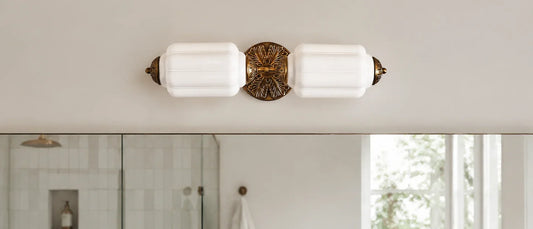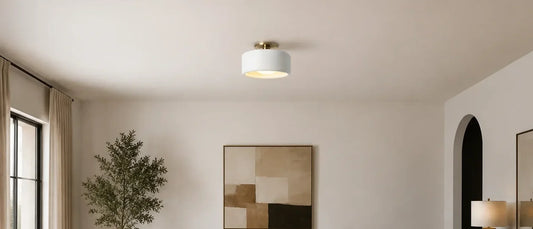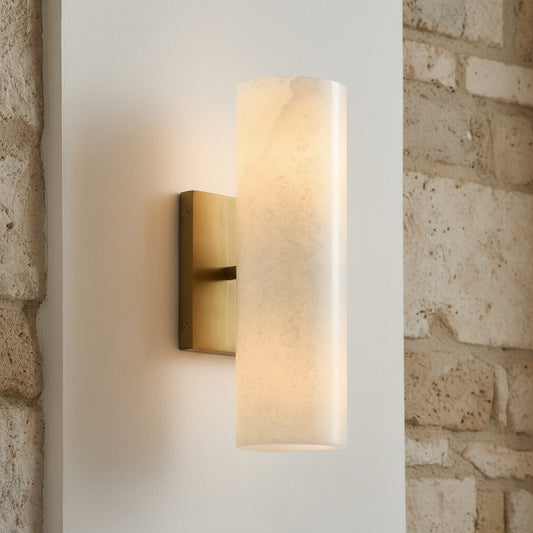
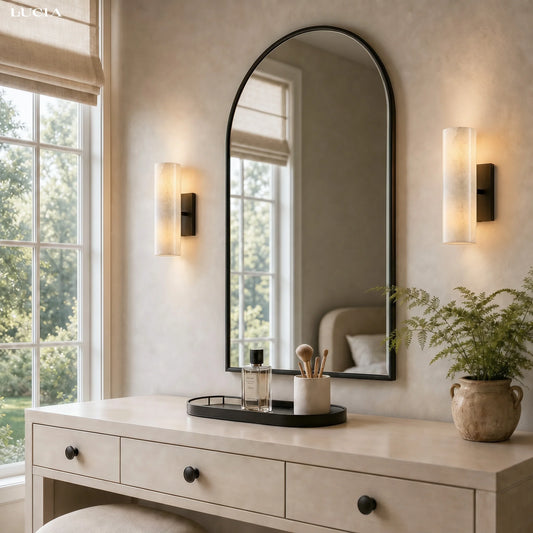





When you walk into a professionally designed room, your eyes are usually pulled toward one specific element. Designers call this a "focal point." Traditionally, this was a fireplace, a large piece of art, or a stunning window view. However, in modern interior design, we are seeing a major shift: lighting has moved from the sidelines to center stage.
As a lighting expert, I am often asked: "Can a light fixture really carry the design of an entire room?" The answer is a resounding yes. In fact, lighting is the only focal point that offers both form and function. It is a sculpture during the day and an atmospheric powerhouse at night. If you choose the right piece, it acts as the "anchor" that pulls every other design element together.
What Makes a Light Fixture a "Focal Point"?
Not every light can be a centerpiece. To act as a visual anchor, a fixture needs to possess three specific qualities: Scale, Silhouette, and Contrast. If a light is too small, it disappears. If it’s too busy, it creates visual clutter. The goal is "balanced impact."

Take, for instance, the Winry 7-Light Dimmable Drum Chandelier. Its drum shape is a masterclass in geometric balance. Because the "drum" silhouette is clean and continuous, it provides enough visual "weight" to draw the eye, but it isn't so ornate that it clashes with your furniture. It commands attention through its refined proportions rather than through gimmicks.
The "Anchor" Effect in the Dining Room
The dining room is perhaps the easiest place to see this in action. A dining table without a significant light above it often feels like it's "floating" in the room. When you add a substantial chandelier, you create a vertical axis. This axis grounds the table and defines the boundaries of the space.

When selecting a focal point for the dining area, consider the light's diameter relative to the table. A drum chandelier like the Winry provides a wide enough footprint to cover the center of the table, ensuring that the light—and the visual interest—is distributed evenly. It creates a sense of symmetry that is deeply satisfying to the human eye.
Further reading::Pendant Silhouettes and Their Impact in Dining and Kitchen Areas
Materials and Texture as a Design Statement
A focal point shouldn't just be "big"—it should be interesting. The materials used in your lighting should complement or intentionally contrast with your other finishes. If you have a lot of hard surfaces like stone or wood, a fabric or metal drum shade adds a layer of sophisticated texture.

The beauty of the Winry 7-Light Dimmable Drum Chandelier lies in its layered design. You have the external drum frame which provides the modern structure, and then the seven internal lights which provide the technical brilliance. This depth creates visual "layers," which is exactly what you want in a focal point. It gives the eye more to explore as you move closer to the piece.
Placement Strategies: Beyond the Table
While the dining room is classic, lighting as a focal point works in almost any room. In an entryway, a drum chandelier acts as a "handshake"—the first thing guests see that establishes the style of the entire home. In a primary bedroom, it adds a sense of hotel-style luxury, turning the bed into a grander, more intentional suite.

The key to these placements is height. A focal point needs to live in the "sightline" of the room. Hanging a fixture too high makes it look like it's trying to escape; hanging it at the right height allows it to interact with the furniture and the people in the room.
Further reading:How to Choose the Right Pendant Light Size
Why the Drum Shape Is a Designer’s Secret Weapon
Why do designers keep coming back to the drum chandelier when they want a focal point? It’s because the drum shape is "style-neutral." Whether your home is Mid-Century Modern, Transitional, or Classic American, the circular drum fits. It softens the rectangular lines of tables and windows, providing a much-needed organic curve to a room full of straight edges.
Furthermore, because the Winry 7-Light Dimmable Drum Chandelier features seven lights, the "glow" it produces is substantial. A focal point shouldn't just look good; it should perform. The brilliance of seven lights ensures that the centerpiece isn't just a dark silhouette, but a vibrant, living part of the room's energy.

Final Thoughts: Choosing Your Centerpiece
If you feel like your room is missing "that one thing" to make it feel complete, look up. You likely don't need a new rug or a different paint color; you need a visual anchor. By selecting a piece that balances scale with elegant simplicity, you can transform an ordinary room into a curated space.
The Winry 7-Light Dimmable Drum Chandelier is designed for exactly this purpose. It is bold enough to lead the room, yet timeless enough to grow with your style for years to come.
Tags:
Vorherige
Why LED Lighting is the Smart Choice for Your Modern Home
Nächste
Does Your Ceiling Light Shrink Your Space? The Hidden Details Making Your Room Feel Smaller