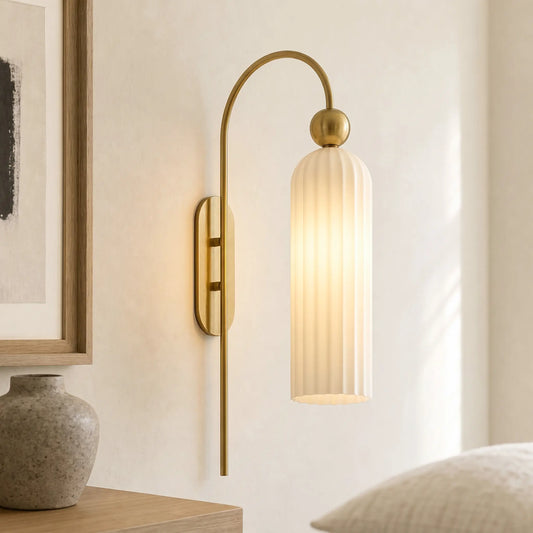
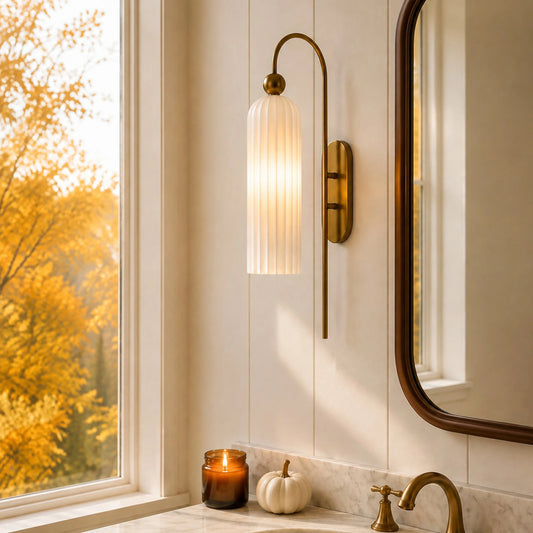
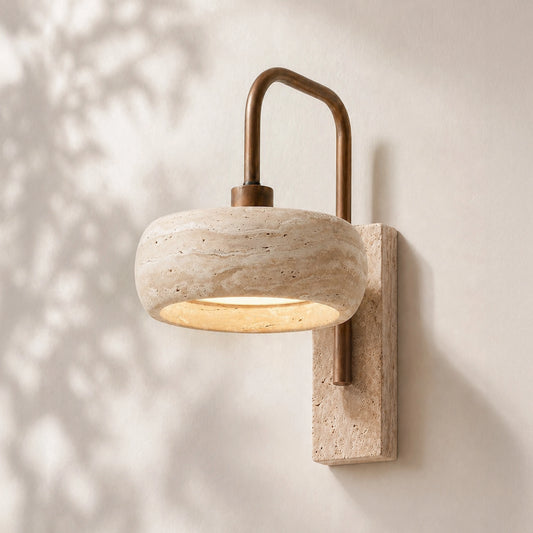

In the world of interior design, a room without a focal point is like a story without a protagonist. Your eyes wander around the space, unsure where to land, and the room ends up feeling "unfinished" or cluttered. Usually, we think of a fireplace, a large piece of art, or a massive window as the focal point. But one of the most effective, versatile, and often overlooked tools for creating spatial balance is the glass floor lamp.
Lighting is the jewelry of a room. However, a glass floor lamp—especially one with rich texture—is more than just a light source; it is a structural element. Because glass carries a different "visual weight" than solid materials, it allows you to play with the layout in ways that a traditional heavy floor lamp won't allow.
In this guide, as a lighting expert, I will show you how to use a glass floor lamp to anchor your room, balance your furniture, and create a sophisticated visual flow.
1. Understanding Visual Weight and Transparency
Before we move furniture, we have to understand "visual weight." Every object in your room "pulls" at your attention. A dark velvet sofa has heavy visual weight. A glass coffee table has light visual weight because you can see through it.
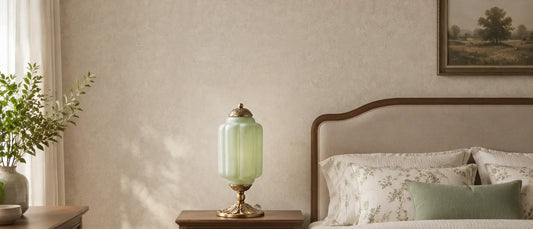
The beauty of a fixture like the Lumi Vintage Opal Textured Glass Eloise Floor Light is that it occupies a "middle ground." Its slender metal frame has a light footprint, but its textured opal glass globe provides a soft, luminous volume. This allows it to act as a vertical anchor in a room without making the corner feel heavy or "closed in."
When you place a glass lamp in a corner, it creates a "glow zone" that expands the perception of the room’s boundaries. Instead of a dark corner ending the room, the light makes the wall feel further away.
2. The Rule of Triangles: Creating Harmony
One of the oldest tricks in the designer’s handbook is the "Rule of Three" or the "Lighting Triangle." To achieve perfect spatial balance, you should avoid placing all your high-interest items on one side of the room.
Imagine your living room from a bird’s-eye view. If you have a large television on one wall and a heavy bookshelf on another, your room is "tilted" visually. You can use a floor lamp to complete a triangle of interest. By placing a stunning glass lamp diagonally across from another major focal point, you draw the eye across the room, making the space feel larger and more intentional.

Futher reading: Height & Scale Matching Formula for Floor Lamps
3. Breaking the Horizon Line
Most furniture—sofas, sideboards, coffee tables—sits at a similar height, creating a "horizon line" around the middle of your room. If every object is the same height, the room feels flat and boring.
A floor lamp is your best tool for breaking this horizon. Because the Lumi Vintage Opal Textured Glass Eloise Floor Light stands tall with a distinct glass head, it forces the eye to move upward. This verticality is essential for "opening up" a room. It draws attention to the height of your ceilings and creates a sense of grandeur, even in smaller apartments.

4. Placement Strategies for Different Layouts
The "Anchor" Placement (Next to the Sofa)
The most common placement is at the end of a sofa. To create balance here, don't just shove the lamp into the corner. Pull it slightly forward so the glass shade is layered in front of the wall. This creates depth. If your sofa is a dark color, the opal glass of the Eloise lamp provides a beautiful, bright contrast that "pops" against the fabric.

The "Reading Nook" Focal Point
If you have an empty corner, you can create a "room within a room." Pair a comfortable armchair with a small side table and a glass floor lamp. Here, the lamp acts as the "roof" of the nook, defining the boundaries of this cozy space. The textured glass ensures the light is soft enough for relaxation while still being a clear visual signal that this is a special spot in the home.

The Entryway Statement
Many people forget that a floor lamp can work beautifully in an entryway. If you have a console table, placing a floor lamp at one end creates an asymmetrical, modern look that is much more interesting than a pair of matching table lamps.
Further reading:Design Approaches for Clustered Glass Lighting Fixtures
5. Balancing Materials: Glass, Wood, and Fabric
A room feels balanced when there is a mix of textures. If you have a lot of wood (floors, coffee table, legs of chairs), adding more wood or heavy metal can make the room feel "stiff."
The introduction of glass—especially textured or "opal" glass—softens the environment. The way the light diffuses through the texture of the Lumi Eloise lamp adds a layer of "soft" visual interest that contrasts beautifully with the "hard" lines of modern furniture. It provides a tactile quality that invites the eye to linger.

6. Creating "Negative Space" with Glass
Sometimes, the most important part of a layout is what isn't there. In design, we call this negative space. If you have a very busy room with lots of patterns and colors, a clear or opal glass lamp is the perfect "reset button." It provides the light and height you need without adding more visual noise. It’s the "breath of fresh air" in a crowded room layout.
Conclusion
Achieving a balanced room isn't about symmetry; it’s about harmony. It’s about ensuring that every corner of your room has a purpose and that the eye is guided smoothly from one piece to the next.
By choosing a fixture that offers both verticality and transparency, you give yourself the ultimate design tool. The Lumi Vintage Opal Textured Glass Eloise Floor Light is specifically designed to perform this balancing act. Its vintage-inspired glass adds character and a clear focal point, while its refined silhouette ensures your space remains open and airy.
When you position your next lamp, don't just think about where you need light—think about where you need balance. Your room will thank you for it.
Tags:
Vorherige
Mastering the Reading Nook: A Guide to Sofa-Side Lighting Bliss
Nächste
Vintage Soul, Modern Home: The Design Philosophy of the Eloise Collection