



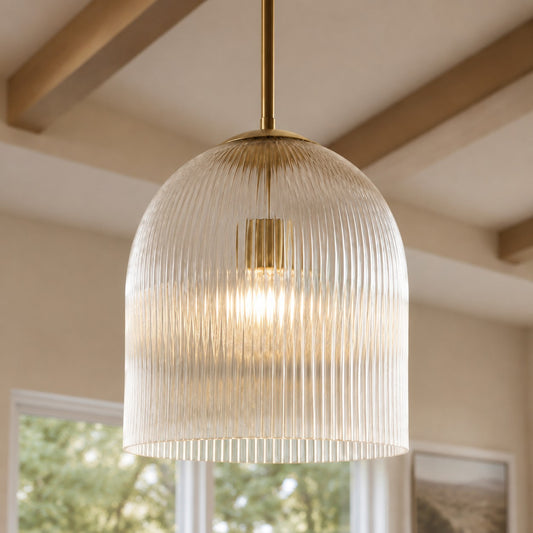
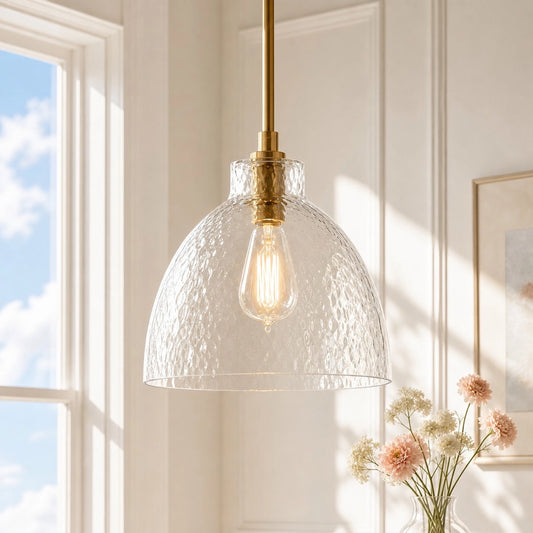

You Bought the Perfect Ceiling Light, So Why Does Your Room Still Feel Wrong? The Hidden Details You Missed

It is a frustratingly common scenario for design-conscious homeowners. You spend weeks researching the ideal lighting fixture. You check the dimensions, pick a stunning design, hire an electrician, and flick the switch—only to feel a wave of disappointment. The fixture itself looks magnificent, yet the room as a whole feels cold, flat, or vaguely uninviting. Why does this disconnect happen?
The direct reality is that a single ceiling light—no matter how high-end or beautifully designed—cannot carry the emotional weight of an entire room by itself. Understanding this layout dynamic aligns with The Biggest Change Happening in Ceiling Lighting Isn't What You Think, as an uninviting space usually suffers from a lack of lighting hierarchy, mismatched color rendering against your furniture textures, and a failure to blend the center light with the rest of the room's physical elements.
Quick Answer: The Solitary Light Source Trap
Your room feels unappealing because you are treating your overhead light as a solitary savior. When an overhead fixture acts as the exclusive light source in a room, it flattens the environment, strips away depth, and fails to bridge the gap between the ceiling and your living zone. To make a room feel truly premium and welcoming, your central light must act as the conductor of an orchestra, working in harmony with secondary eye-level layers, correct color temperatures, and soft material diffusers.
The 60-30-10 Rule of Layered Lighting Hierarchy
To fix a disjointed room atmosphere, you must apply the foundational interior design rule of Layered Luminance Hierarchy. Professional lighting design dictates that a balanced space should divide its light output into three distinct operational layers: Ambient, Task, and Accent lighting.
Think of it as the 60-30-10 rule for illumination:
- 60% Ambient Light: Provided by your central overhead fixture, creating the base blanket of safety and visibility throughout the footprint.
- 30% Task Light: Delivered by directional reading lamps, under-cabinet strips, or desk lighting to bring focused function to specific workstations.
- 10% Accent Light: Achieved through low-wattage wall sconces, uplights behind plants, or soft candlelight to create visual interest and highlight textures.

Without the 30% task layer and 10% accent layer, your gorgeous new ceiling light is forced to work on maximum output all the time, neutralizing the room's natural architectural character and leaving your layout feeling like a clinical showroom rather than an inviting home.
When to Choose an Interconnected Lighting Scheme
Transitioning to an interconnected, multi-layered layout is vital for spaces where human connection, emotional winding-down, and relaxation take place. If you are decorating a main living room, an intimate master bedroom, or a formal dining area, layering is non-negotiable.

In these environments, you want the ability to dial back the overhead illumination in the evening while keeping the room beautifully defined by softer surrounding lights. A high-quality ambient anchor like the Evron Modern Drum Semi Flush Mount Ceiling Light is custom-engineered for exactly this purpose; its premium smooth glass and sleek metal canopy hardware work flawlessly as a primary light source during the day, while blending seamlessly with lower table lamps at night without competing for visual dominance.
When to Prioritize Utilitarian Uniformity
There are rare instances where complex emotional layering isn't necessary. In purely utilitarian, high-efficiency task spaces—such as a deep walk-in storage pantry, a laundry utility room, or a residential workshop—you do not need to worry about mood lighting or intricate layers. In these zones, a simple, ultra-bright uniform light throw is perfectly acceptable because the primary goal is rapid, clear task visibility rather than comfort or high-end aesthetic integration.
4 Hidden Mistakes Sabotaging Your Room's Atmosphere
1. The "Eerie Island" Effect (Incorrect Placement Over Furniture)
Centering a ceiling light strictly in the middle of the room's drywall ceiling architecture instead of aligning it with the actual furniture arrangement below creates a massive visual mismatch. If your sofa or dining layout sits off-center, a dead-center light forces an unnatural spatial break, leaving your primary seating zone feeling detached and emotionally cold. To map your spatial layout correctly, learning How to Choose the Perfect Ceiling Light Based on Room Size, Ceiling Height and Interior Style will prevent these common alignment errors.
2. Severe Color Rendering Index (CRI) Mismatch
Even if your fixture is gorgeous, using low-quality integrated LED specifications with a poor Color Rendering Index (under 80 CRI) will wash out the rich tones of your rugs, wooden coffee tables, and upholstered seating. This makes your high-end furniture look dull, gray, and unappealing. Premium spaces require high CRI integrated LED hardware to allow fabrics and finishes to display their true, vibrant color palettes.
3. Forgetting the Mid-Level Sightlines
If you have a beautiful ceiling light and nothing illuminated below it until you reach the floor, the middle section of your room becomes a visual dead zone. The human brain craves continuous visual information. Adding mid-level light sources helps connect your beautiful ceiling lighting to the rest of the living environment.
4. Ignoring Material Glare Dynamics
Pairing highly polished floors or glossy countertops with an unshielded, clear glass fixture results in intense, harsh reflections bouncing off every flat surface. This creates distracting glare that causes subtle eye strain. The fix requires choosing a fixture designed with professional diffusion materials—like those found in the Evron Modern Drum Ceiling Light—which soften integrated LED dispersion to eliminate harsh secondary glare entirely.

The Path to a Harmonious Living Space
Unlocking the full potential of your room means selecting a foundational light fixture that plays well with others. You want an ambient centerpiece that commands the space with elegant design, but possesses the physical material capability to soften its output so that table lamps and accent sconces can do their jobs effectively.
This delicate balance is exactly why the Evron Modern Drum Glass Semi Flush Mount Ceiling Light consistently solves the "wrong room feeling." Its minimalist metal canopy and smooth glass drum act as a premier styling feature when turned off, and an incredibly sophisticated light distributor when turned on. By gently scattering integrated LED intensity into a refined, multi-directional ambient glow, it bridges the gap between your ceiling architecture and eye-level decor, transforming isolated, disjointed rooms into deeply integrated, welcoming environments.
Atmosphere & Integration FAQs
Why does my room look warm in the store display but cold when installed at home?
Stores mix warm backdrops with 2700K settings. If your home has cool walls or high-Kelvin integrated LEDs above 3500K, the output reflects clinically.
How do I coordinate a ceiling light with existing floor lamps?
Maintain a uniform 3000K warm temperature and choose an overhead fixture with a smooth, untextured glass diffuser to complement fabric floor shades. 、
、
What does a dimmable ceiling fixture add to a room's overall feel?
It gives total control over your hierarchy, allowing the integrated LED module to shift instantly from bright daytime function to soft evening accent warmth.
Tags:
Previous
How to Choose the Perfect Ceiling Light for Your Room Size, Height, and Style
Next
The Most Common Mistakes People Make When Choosing Wall Sconces