



The right ceiling light changes a home in the evening because it changes what the room asks you to do. A hard, glaring fixture can make a living room feel like a workplace. A fixture that is too weak can leave corners unfinished. The best choice creates a dependable ambient layer, suits the room’s proportions, and leaves room for lamps and natural materials to contribute.
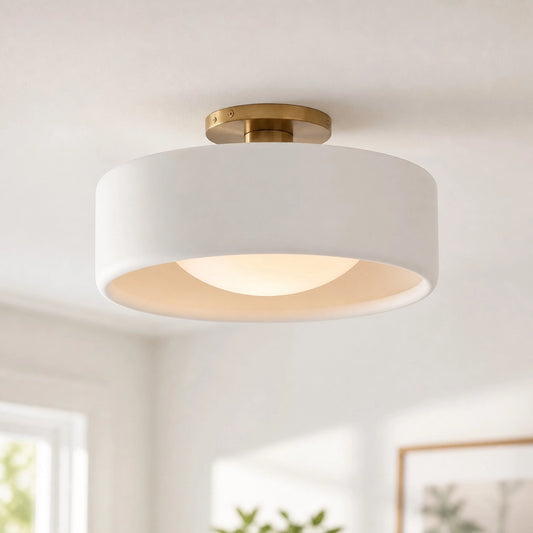
A useful example is the Evron Modern Drum Glass Porcelain Semi-Flush Mount Ceiling Light. The product title itself points to four decisions worth examining: a modern profile, a drum shape, glass and porcelain materials, and a semi-flush installation. Those traits make it a helpful reference when comparing ceiling lights for apartments and other rooms with limited overhead clearance. Verify current size, source, finish options, price, and compatibility on the live product page.
Start with the room’s evening job

Once your room measurements are clear, compare them with the Evron product specifications before you make a shortlist.
Write down what the room needs after sunset. In a living room, the ceiling light should support arrival, tidying, conversation, and movement. In a bedroom, it may be used briefly for dressing or finding something, then replaced by lower, quieter sources. In a dining area, it should define the table without creating a bright halo in the eyes of everyone seated around it.
This first step keeps you from choosing by appearance alone. A fixture can be beautiful and still wrong for a room that needs broad, low-glare illumination or a very shallow projection.
Use a five-part selection check

1. Scale
Measure the room and note the furniture below the fixture. The light should feel substantial enough to anchor the zone but not so large that it crowds door swings, shelving, or ceiling details. In a small apartment, visual weight matters as much as diameter.
2. Projection
Semi-flush mounts are often chosen because they preserve headroom. Compare how far the fixture drops from the ceiling with the height of the room and the circulation path below it. In a bedroom or hallway, a compact projection can prevent accidental contact and keep the sightline clean.
3. Material and diffusion
Look for materials that support the mood you want when the light is both on and off. Glass may provide diffusion and a sense of openness; porcelain can add a crafted, opaque note. Ask whether the shade hides the source from normal seated viewpoints and whether the finish works with nearby hardware. For a compact floor plan, compare these material choices with The Best Ceiling Lighting Ideas for Apartments That Need to Feel Bigger and Brighter.
4. Light control
Check the manufacturer’s information for lamp type, compatibility, and dimming. Never assume that a fixture is dimmable because it looks modern. If the page does not specify a performance detail, treat it as unconfirmed and ask before ordering.
5. Installation fit
Confirm the ceiling junction box, support, switch location, and local requirements. Follow the supplied instructions and use a qualified electrician whenever existing wiring, ceiling support, or compliance is uncertain.
Match the ceiling light to the rest of the room

For a close-to-ceiling option with a defined drum profile, review the Evron listing and confirm compatibility with your installation conditions.
A ceiling fixture should relate to at least one other decision in the room: a cabinet pull, a table edge, a ceramic object, or the shape of a mirror. This does not mean every finish must match. It means the fixture’s geometry and material should have a reason to be there.
For example, a drum profile can echo a round dining table or soften a room full of rectilinear furniture. Glass and porcelain can bridge contemporary architecture and warmer, tactile accessories. These relationships are small, but they make evening light feel settled rather than added at the last minute.
A simple evening test before you buy
Stand where you normally sit and imagine the fixture switched on. Would you see the lamp or the source? Would the light reach the corners? Would a lower lamp still have a role? Mark the proposed footprint on the ceiling or floor with painter’s tape if possible. Then check the view from the doorway, sofa, bed, and dining chair.
This test catches many expensive mistakes before installation. It also helps you decide whether you want the ceiling light to lead the room or quietly support it. The answer can differ from one room to the next, even within the same home. If atmosphere is the deciding factor, The Shift from Functional Lighting to Emotional Lighting Is Changing Modern Interiors explains how the same room can support different evening rituals.
Use the Evron Modern Drum Glass Porcelain Semi-Flush Mount Ceiling Light as a product reference while you compare, and verify every current specification against the needs of your room.
Frequently asked questions
What is the most important factor when choosing a ceiling light?
Start with the room’s job and the fixture’s scale. Light quality, projection, material, and installation fit follow from those decisions.
Is a drum ceiling light a good choice for a living room?
It can be, especially when you want a defined focal point with a contained profile. Confirm the shade’s diffusion and the fixture’s size for the room.
How do I avoid glare from a ceiling fixture?
Choose a diffused source, check the seated viewing angle, and use additional low-level lighting so the ceiling fixture does not need to run at maximum brightness.
What should I verify on the product page?
Check dimensions, lamping or integrated source details, compatibility, finish, included hardware, warranty, and installation requirements.
Tags: