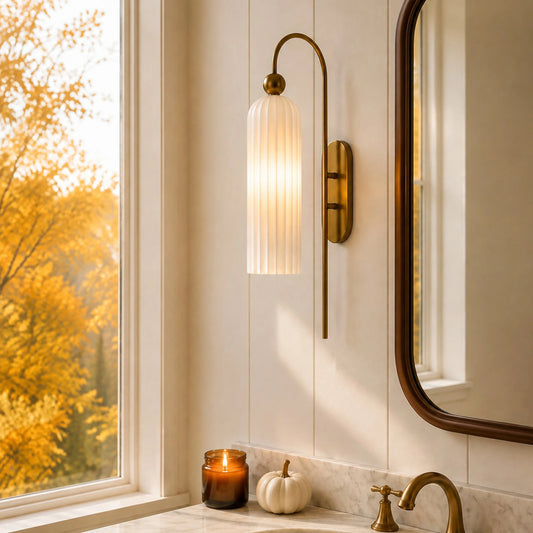



Another table lamp is not always the answer to a dark or crowded bedroom. If the nightstand is already full, the shade blocks the view, or two sleepers need separate control, wall lighting can put useful light closer to the bed without taking up another surface.
Wall lights are usually the stronger choice when the bed position is settled and you want a cleaner, permanent lighting layer. A table lamp is still better when you rent, move furniture often, or need a low-cost light that can change with the room. The decision is less about trend and more about space, task, and flexibility.

Start With the Problem the Table Lamp Is Not Solving
Before replacing anything, identify the failure: lost nightstand space, glare at pillow height, an unreachable switch, trailing cables, or weak reading light. The Most Common Mistakes People Make When Choosing Wall Sconces helps rule out fixture and placement mistakes before you commit to a permanent wall position.
If the current lamp already gives comfortable light, leaves enough room for daily items, and can be reached from bed, there may be no reason to replace it. Wall lighting earns its place when it removes a real inconvenience or adds a lighting layer the table lamp cannot provide.
When Wall Lighting Works Better in a Bedroom
It gives the nightstand back to daily life
A lamp base and shade can occupy most of a narrow bedside surface. Moving the light to the wall leaves room for water, a book, glasses, medication, and a charging device. This is especially useful beside a wardrobe, window, or compact bed where a wider nightstand will not fit.

It can place light closer to the actual task
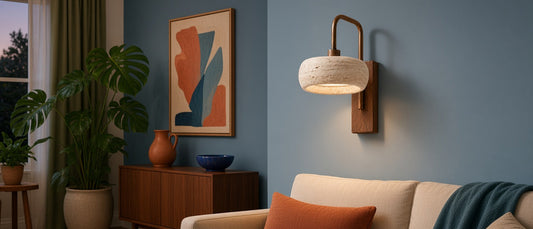
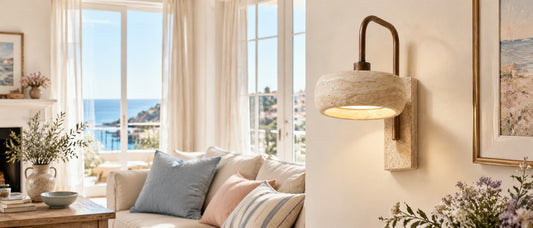
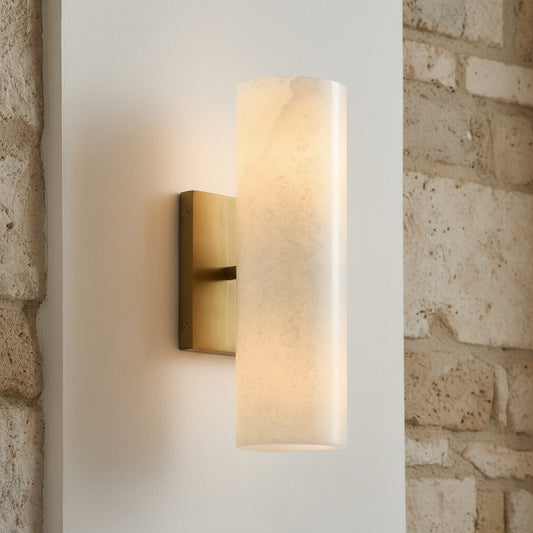
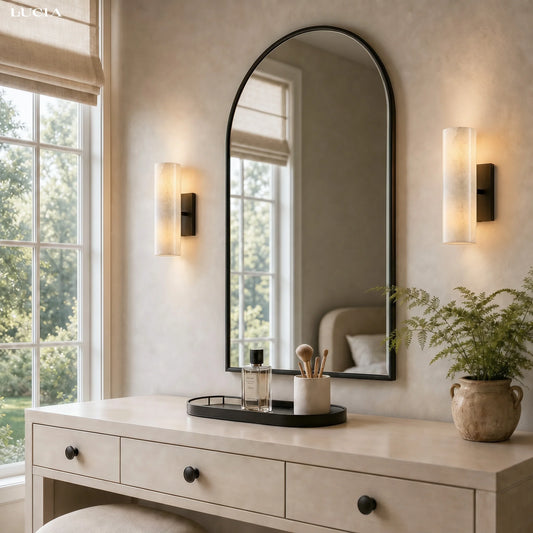
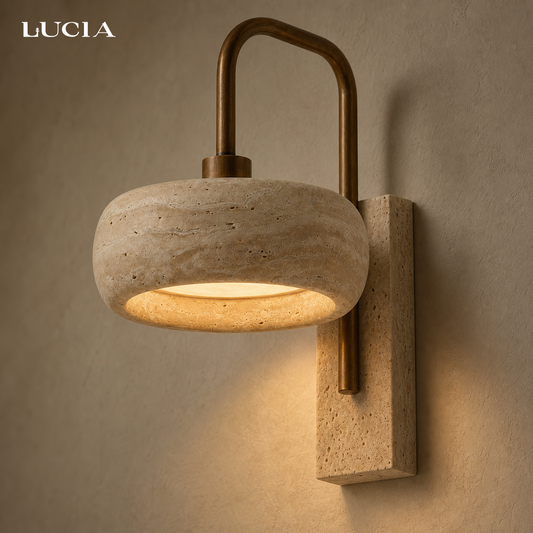
A wall light can sit near the reader's shoulder instead of at the far edge of the table. A softly diffused fixture such as the Tavik Travertine Cylinder Wall Sconce can add a warm bedside layer when its beam, switch position, and projection have been tested from the normal reading position.
The benefit is control, not simply brightness. The best position lights the page or bedside area without exposing the brightest part of the lamp to someone lying down. For two sleepers, separate switching or dimming is more valuable than forcing one central light to serve both sides.

It makes the lighting feel part of the room
Wall lighting can frame the headboard, soften a blank wall, and spread glow at eye level. Because it is fixed, it usually looks calmer than adding another object and cable to an already busy bedside arrangement. That permanence is an advantage only when the bed layout is unlikely to change.
When a Table Lamp Is Still the Better Answer
Choose a table lamp when you cannot alter the wall, need to move the bed, or want to test the lighting position before paying for wiring. It is also easier to replace when your reading habits, furniture, or style changes. In a rental or guest room, that flexibility may outweigh the saved surface space.
A table lamp can also provide softer, lower light when the bedside surface is generous and the shade sits below the normal eye line. The better choice is the one that makes nightly use easier; wall-mounted does not automatically mean more comfortable.
Use the Same Lighting Logic Beyond the Bedside
A bedroom decision often reveals that a dressing area, reading corner, or nearby hallway also lacks eye-level light. The Best Spaces for Decorative Wall Lights Beyond the Bedroom shows where wall lighting solves a genuine room problem and where a portable lamp remains the simpler choice.
Compare the Real Cost, Not Just the Fixture Price
A table lamp usually needs only a nearby outlet. A hardwired wall light may require an electrician, junction boxes, wall repair, compatible dimmers, and final touch-up. A plug-in wall light sits between the two: it saves surface space but still leaves a visible cord.

Price the full installation before ordering. Two wall lights can cost more to install than one table lamp, but they may also replace two lamps, free two surfaces, and provide separate controls. The useful comparison is total cost against years of daily use, not product price alone.
Five Checks Before Replacing the Lamp
1. Confirm the light's job
Decide whether the fixture is for reading, low evening light, decoration, or a mix of those tasks. A decorative glow may not be enough for reading, while a narrow spotlight can feel harsh when used for winding down.
2. Test reach and glare from the bed
Sit against the real pillows and test the proposed light center with removable tape. Check the brightest opening from both sleeping positions and confirm that each person can reach the switch without sitting up or leaning across the bed.
3. Measure projection, not only height
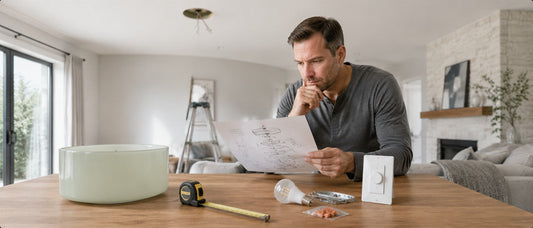
Use the product drawing to check Tavik's projection and mounting details. Make sure the fixture clears the headboard, pillows, curtains, artwork, open wardrobe doors, and the movement needed to change bedding.

4. Confirm wiring before choosing the finish
Ask the installer about junction-box position, switch wiring, wall construction, dimmer compatibility, and whether the backplate covers the required opening. Resolve these constraints before choosing color or material.
5. Plan the whole bedroom lighting layer
A bedside wall light should not be expected to replace every source. Keep a dimmable ceiling or ambient layer for general use, then let the wall light handle reading, low evening light, or visual balance around the bed.
A Practical Decision by Bedroom Type
In a small bedroom, choose wall lighting when clear nightstand space and reduced cable clutter matter every day. In a shared bedroom, prioritize independent controls and glare protection. In a rental or frequently rearranged room, start with a table lamp or plug-in wall light until the layout proves stable.
If the bed position is settled and a permanent warm wall layer solves the problems you identified, review Tavik as a bedside wall-lighting option. Confirm the dimensions and installation plan before ordering.
FAQ
Are wall lights better than table lamps for small bedrooms?
Often, because they free the nightstand and reduce bulky objects around the bed. A table lamp may still be better when wiring is not possible or the furniture layout changes often.
Can a wall light fully replace a bedside lamp?
Yes, when it provides the right reading or ambient light, has a reachable control, and does not create glare. Some bedrooms still benefit from an additional ceiling or portable ambient layer.
Do bedroom wall lights need to be hardwired?
No. Plug-in wall lights can save surface space without opening the wall, although the visible cord needs to be routed safely. Hardwired fixtures create a cleaner finish but require more planning and installation work.
Tags:
Vorherige
The Best Spaces for Decorative Wall Lights Beyond the Bedroom
Nächste
The Best Ceiling Lighting Combinations for Open-Concept Living and Dining Spaces