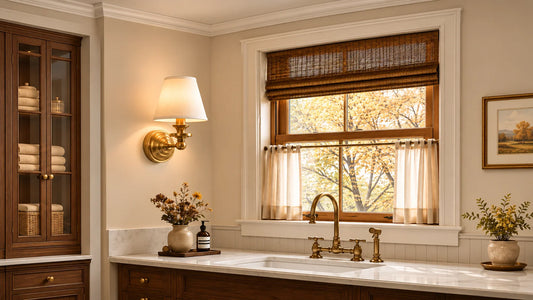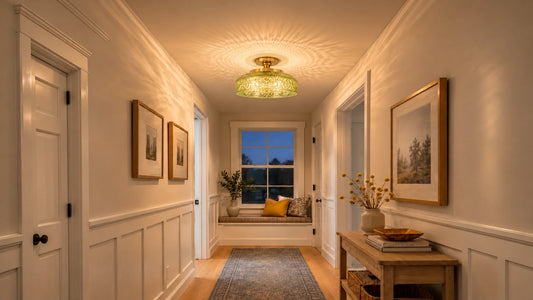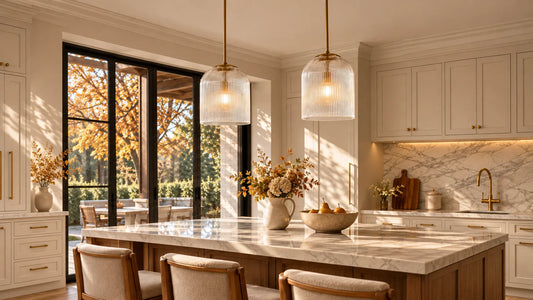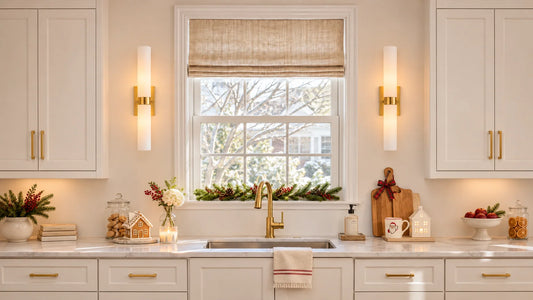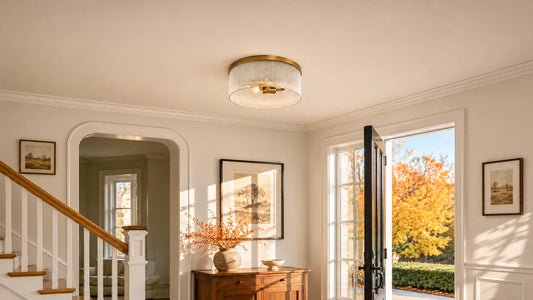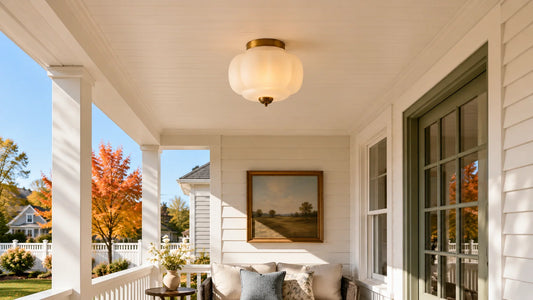
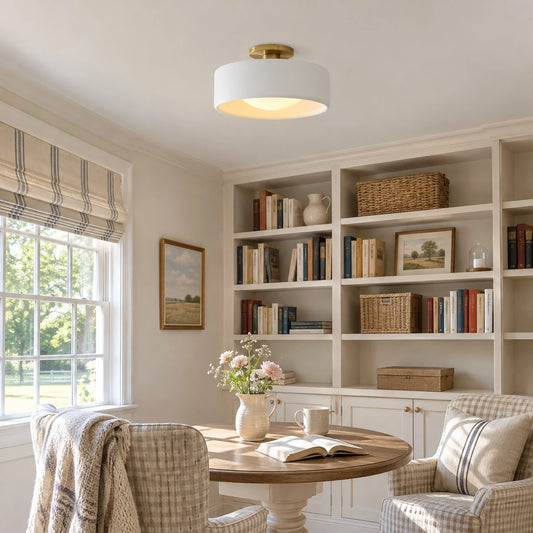
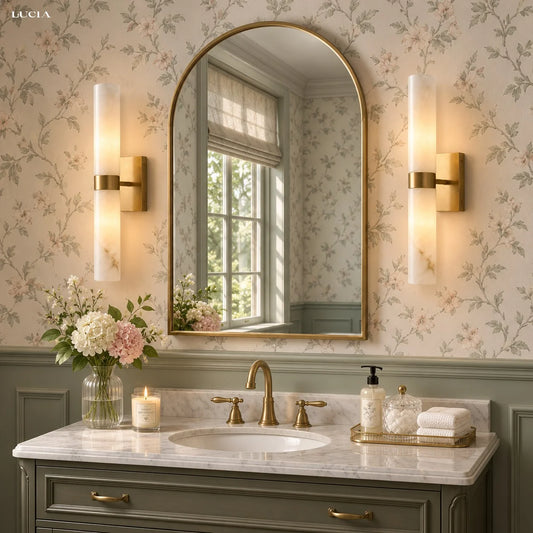

Farmhouse lighting is easy to want and easy to overdo. The warmth is worth keeping. The full theme usually is not. A room can take one ribbed cup and still look like itself.
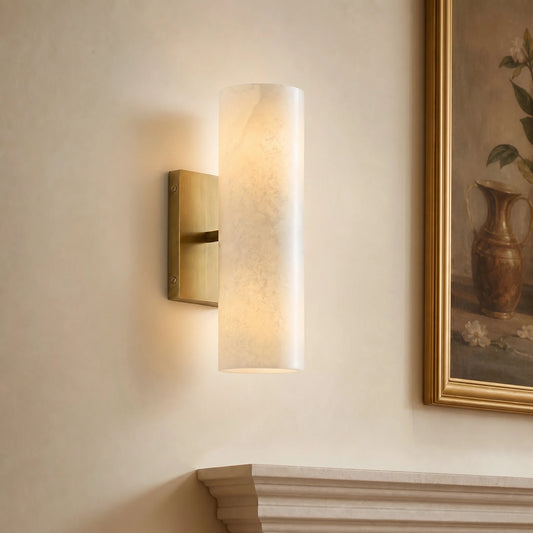
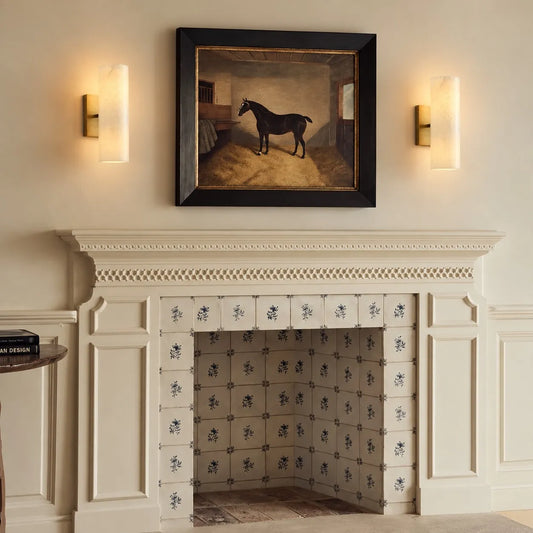
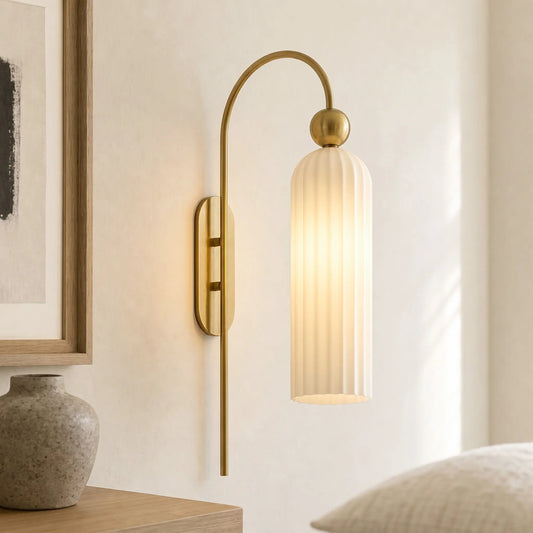
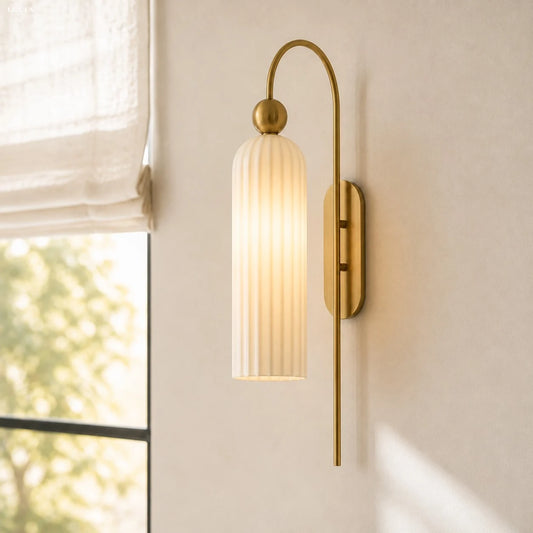
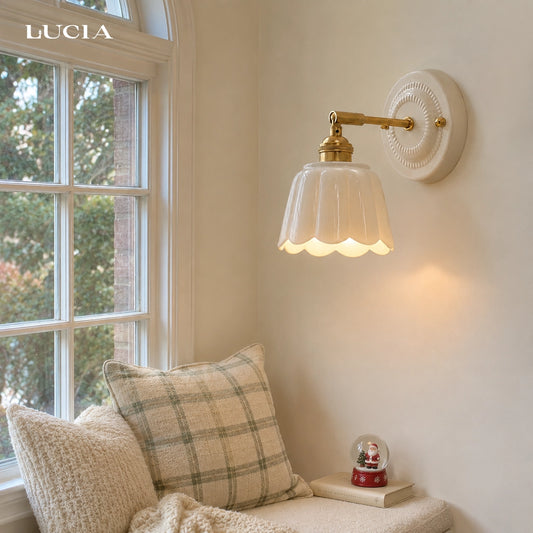
The photographs do not build a set around it. A single cup sits beside a black-framed window, over a bench that already holds a book. Two stone sconces flank a painting above a quiet mantel. The vintage part is the glass and the metal. The room stays itself.

The room was already calm
That window seat does not need another farmhouse object. It needs a light that can remain after the daylight drops. The alabaster cup does that without competing with the window. The page lists reading corners among the uses. This is the quiet version: a glow at the edge of a seat, not a lamp taking the cushion.
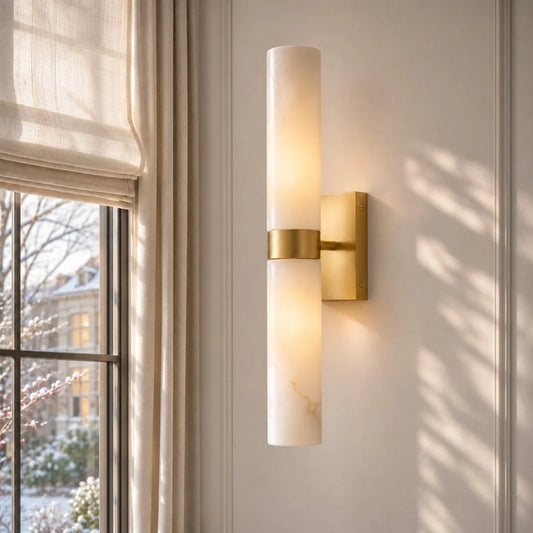
The fireplace makes the same point at a larger scale. The painting is the subject. The sconces only hold the wall beside it, because the mantel and the picture were already there. What to Put on an Awkward Empty Wall: When a Wall Sconce Actually Works draws the same line. A sconce helps a wall that is missing light, or a relationship to something already in the room. It does not rescue a wall that wanted to stay empty.

A ribbed cup is an older shape. In these photographs it sits in a calm room, not a styled one. How to Mix Vintage Bathroom Lighting With Modern Style is the closer read if that mix is the job.
How much of the theme do you want?
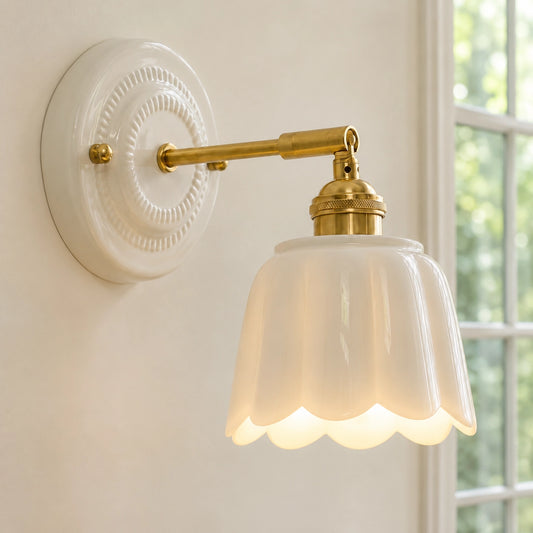
Once the room is calm, the shade decides how loudly the light speaks. Clear ribs leave the bulb visible and set a fine pattern on the plaster. That mark is useful. A plain wall feels finished without a sign, a crate, or another copper object.
The page calls the texture a soft, handcrafted glow. In the clear photographs, soft means broken into lines. The bulb is still the bright point. Milk glass and frosted glass keep the ribs and quiet that source. Alabaster drops the ribs. The veining becomes the glow, and the wall beside it stays plain.


The Shift from Functional Lighting to Emotional Lighting Is Changing Modern Interiors is the larger idea. A ceiling light can make a room bright and still leave the evening flat. A small wall light changes the hour because it sits beside the place you actually stay.
Cup Shades Stay Subtle, Bar Styles Stand Out.
1-head 5 x 5 x 9 in A single cup
2-head 5 x 5 x 13 in One up, one down
3-head 17 x 6 x 9 in A horizontal bar
A one-head is a cup, not a lantern. A two-head keeps that 5 in width and grows to 13 in, one shade above the plate and one below. A three-head jumps to 17 in wide and 6 in off the wall. It will read as the feature. That can be right over a vanity or a long console. It is too much if you only wanted a warm mark beside a window.
The shade is 4.5 in across and 5 in high. The backplate is 5 in across. Those parts repeat. The arrangement is the style decision. If you wanted the warmth and not the theme, start with the cup.
Keep the warmth. Leave the theme in the name. Clear glass will give a plain wall a pattern. Alabaster will give it a glow and less else. The bar will take the wall over. Confirm the shade, the head count, and the live option on the Vireo ribbed glass sconce.
Before the name decides the room
Can this sconce work in a minimalist space?
Yes. The single cup version works beautifully in minimalist rooms. It adds gentle warmth without heavy decorative details that clash with clean lines.
Can I mix clear ribbed glass and alabaster sconces in the same room?
Yes, you can mix them. Keep the metal finish consistent to hold the look cohesive, even with different shade materials.
Is the 3-head bar sconce suitable above a narrow bathroom vanity?
It is 17 inches wide. It fits best on wider vanities. It may overwhelm a narrow countertop.
Does alabaster stone need extra care compared to glass shades?
Yes. Use only a soft dry cloth. Water or liquid cleaners can stain the natural veined stone surface.
Tags:
Previous
Why Your Bedroom May Need a Slim Wall Sconce Instead of Another Lamp
Next
Why Open-Concept Kitchens Lack Focus Without Pendant Lighting Above the Island