
In the world of interior design, light is the invisible hand that shapes how we feel about a space. While the fixture itself is a piece of furniture, the *way* it throws light is what truly defines a room. Among all materials—fabric, metal, plastic, or wood—none interacts with light quite as dynamically as glass.
As a lighting specialist, I often see homeowners choose metal shades because they look "solid." However, metal shades are opaque; they trap light and force it in one direction. Glass, on the other hand, is a medium of transformation. Whether it is crystal clear or beautifully tinted, like the Modern Arched Floor Lamp with Amber Glass Shade, glass allows light to perform in ways other materials simply can't match. In this article, we’ll explore the four key performance characteristics of glass lighting and how they impact your home.
1. 360-Degree Luminous Distribution
The most significant advantage of a glass fixture is its ability to provide "omni-directional" light. When you turn on a lamp with a glass shade, the light doesn't just hit the floor or the ceiling—it fills the entire volume of the room. This is known as 360-degree distribution.
This characteristic is vital for "ambient lighting." Because the light can travel through the shade in every direction, it eliminates dark corners and makes a room feel larger and more open. If you have a small living room, using a transparent or semi-transparent fixture can prevent the "cave effect" often caused by heavy, downward-pointing metal lamps. The Modern Arched Floor Lamp utilizes its amber glass to ensure that while the light is softened, it still reaches every corner of your seating area, providing a balanced, airy feel.
Further reading: Best Placement Examples in Living Rooms, Bedrooms, Studies
2. Refraction: The "Glow" Factor
Refraction occurs when light passes through a medium of a different density—in this case, from air through glass. This process slightly bends the light waves, which creates that beautiful "sparkle" or "glow" we associate with high-end lighting.
Transparent glass fixtures act like a lens. They don't just let light through; they clean it up and polish it. This is why a bulb inside a glass shade looks more "magical" than a bare bulb. When you choose a tinted glass, such as amber, you are adding a layer of color-refraction. This shifts the light's color temperature toward the warmer end of the spectrum, mimicking the soothing quality of a candle flame or a fireplace. It turns a standard LED bulb into a source of comfort.
3. Reducing Visual Weight
In lighting design, we talk a lot about "visual weight"—how heavy an object looks in a room. A large metal floor lamp can look like a giant anchor, dominating the visual space. A glass fixture of the same size, however, feels light and ethereal.

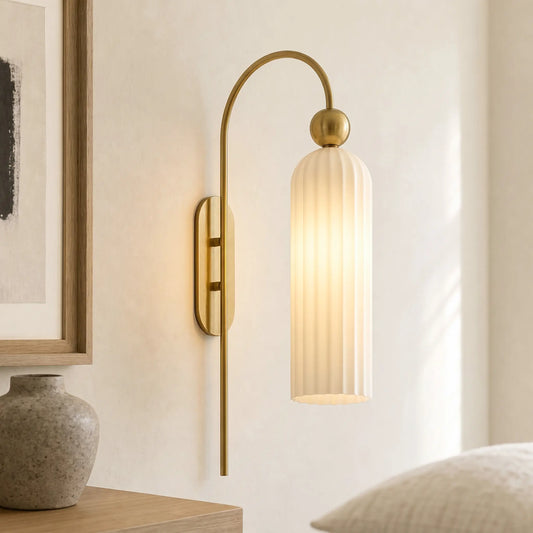
Because you can see through the shade, the eye doesn't stop at the lamp; it travels through it to the wall or the decor behind it. This makes glass fixtures the perfect choice for "crowded" rooms or minimalist spaces where you want to maintain a sense of flow. The Modern Arched Floor Lamp with Amber Glass Shade is a masterclass in this principle. Its slender arch and transparent shade provide a high-impact design statement without making the room feel cluttered.
Further reading:Choosing the Right Size of Glass Floor Lamp for Your Space
4. Softening the "Hot Spot"
A common complaint with lighting is the "hot spot"—that blindingly bright point where the bulb is visible. While clear glass doesn't hide the bulb, it does change how the light from that bulb hits your eyes. High-quality glass used in modern lamps is engineered to have a specific thickness that helps dissipate heat and slightly soften the intensity of the light filament.

When you move into tinted glass, like amber or smoked glass, this "softening" effect is amplified. The tint acts as a high-quality filter, reducing glare significantly. This allows you to use a higher-wattage bulb (for more light) without the discomfort of harsh brightness. It is the ultimate "cheat code" for creating an atmosphere that is both bright enough to read by and soft enough to relax in.
5. Material Interaction and Reflections
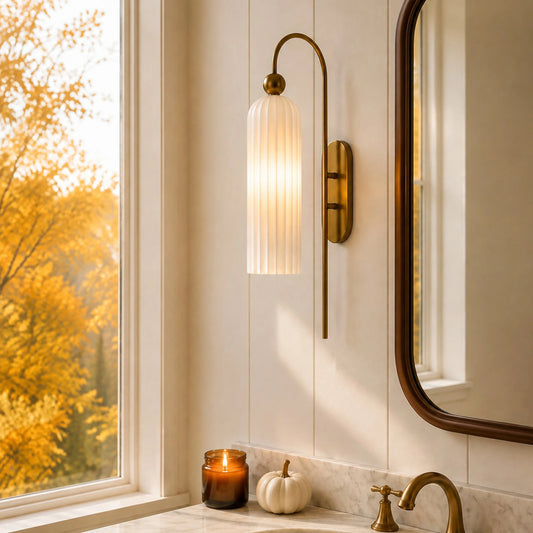
Finally, glass lighting interacts with the rest of your room. The surface of a glass shade will catch reflections from windows during the day and from other light sources at night. This creates a sense of depth and movement in your interior design.

A glass lamp is never "static." As you move around the room, the highlights on the glass change. In the evening, the Modern Arched Floor Lamp reflects the room's warm tones back onto itself, creating a cozy "cocoon" of light. This interaction is why glass has remained the gold standard for luxury lighting for centuries—it is a living, breathing part of your home's ecosystem.

Conclusion: The Science of a Beautiful Glow
Understanding light performance helps you move beyond just "buying a lamp" and toward "designing an experience." Glass fixtures offer a unique combination of 360-degree light, artistic refraction, and visual lightness that other materials simply cannot match.
If you want to experience the peak of light performance, the Modern Arched Floor Lamp with Amber Glass Shade is an exceptional choice. It takes the science of light—refraction, diffusion, and warmth—and packages it in a stunning arched design that serves as both a light source and a conversation piece. Elevate your home's performance today with the beauty of amber glass.
Tags:
Previous
Sparkling Brilliance: A Professional Guide to Cleaning and Maintaining Your Glass Floor Lamps
Next
Mastering Ambiance: How Color Temperature Transforms Your Living Space