Understanding the Difference Between Flush Mount and Semi Flush Mount Ceiling Lights Before You Buy

The practical difference is installed depth. A flush mount sits directly against the ceiling and protects headroom; a semi-flush mount hangs from a short stem or gap, adding visible shape and often a wider path for light. Neither type is automatically brighter or better.
Choose by the lowest finished point, the room below it, and the way the shade controls glare. Those three checks are more reliable than choosing from a styled room photo.
Flush Mount vs Semi Flush Mount at a Glance
| Decision factor | Flush mount | Semi-flush mount |
|---|---|---|
| Ceiling clearance | Keeps the fixture closest to the ceiling | Uses some vertical space for a short drop |
| Visual presence | Quiet and low-profile | More sculptural and easier to use as a focal point |
| Light path | Depends heavily on the diffuser and shade | May allow more side or ceiling light, depending on openings |
| Cleaning | Usually fewer exposed surfaces | Often has a stem, canopy gap, or layered shade to reach |
| Best starting point | Tight hallways, closets, low traffic routes | Bedrooms, living rooms, entries with measured clearance |

When a lower ceiling is the main reason for your comparison, Why Semi Flush Mount Ceiling Lights Are Becoming the Preferred Choice for Modern Homes with Lower Ceilings explains when the small extra drop earns its place and when it does not.
What Changes When the Fixture Drops Below the Ceiling
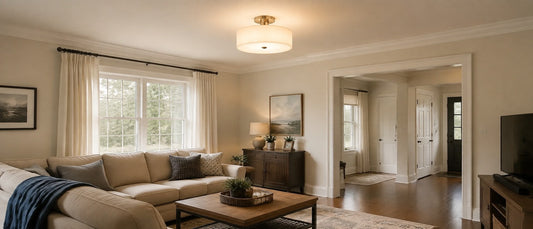
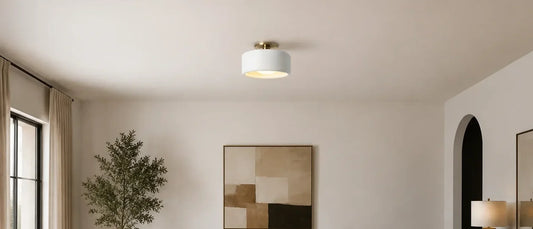
A flush mount visually merges with the ceiling. A semi-flush fixture creates a shadow line below the canopy, exposes more of the shade, and can send light sideways or upward. That added depth can make a room feel designed rather than purely functional, but it also makes proportion and glare more important.
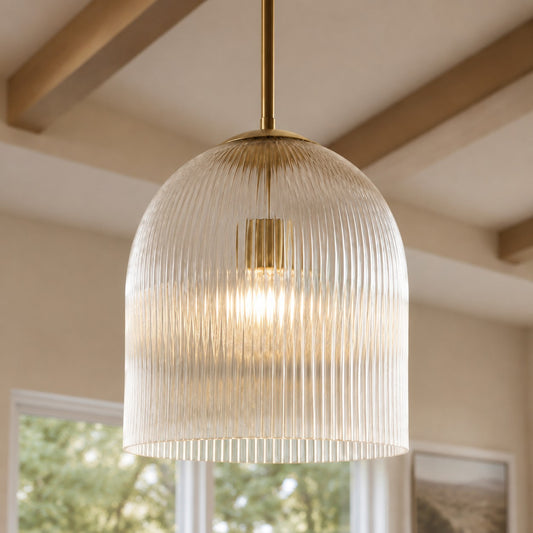
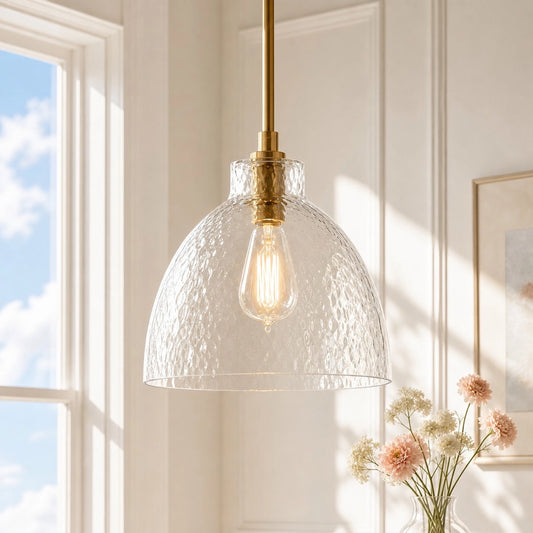
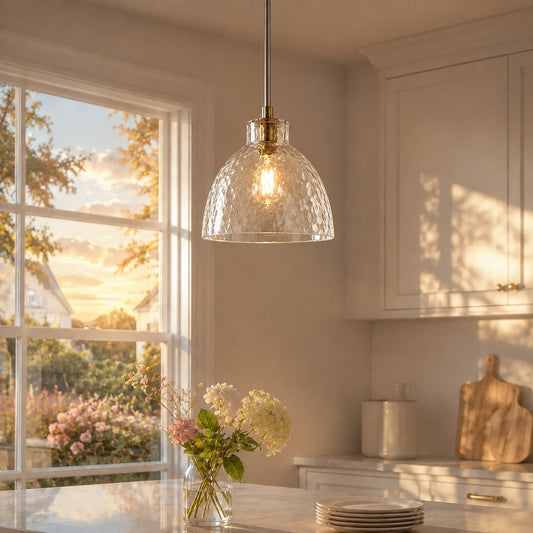
For a concrete comparison, view the glass Evron semi-flush light and its installed profile. Use the selected size and complete fixture depth as evidence; do not infer fit from the word “semi-flush” alone.

Use Ceiling Height and Traffic to Rule Out the Wrong Type
Measure from the finished floor to the ceiling, then subtract every part of the fixture below the ceiling: canopy, stem, shade, diffuser, and finial. For example, a 244 cm ceiling with a 30 cm finished fixture depth leaves 214 cm below the light. Test that remaining clearance against the exact route rather than treating one number as a rule for every home.
- Use a flush mount where people, tall furniture, doors, exercise equipment, or ladders regularly pass below.
- Consider a shallow semi-flush mount when the fixture sits over a table, bed zone, or open seating area and the lowest point remains comfortable.
- Check the view from the doorway and from seated height. A fixture can clear heads and still feel visually too low.
A low ceiling does not automatically require the flattest fixture. The correct choice is the shallowest option that still provides the light quality and visual presence the room needs.
Choose by Room, Not by Category Alone
| Room | Better starting point | What to verify |
|---|---|---|
| Hallway or small entry | Flush mount | Door swing, moving routes, glare at standing eye level |
| Bedroom | Shallow semi-flush or diffused flush mount | View from bed, dimming, bed-making clearance |
| Living room | Semi-flush when proportion allows | Diameter against the seating group and support from lamps or sconces |
| Kitchen circulation | Flush mount in open routes | Cabinet doors, task shadows, cleanable shade surfaces |
| Dining area | Semi-flush over a defined table zone | Table alignment and the sightline across the room |

In a bedroom or living room, check Evron’s glass diffuser and available size options against the room’s sightlines. Diffusion matters because a visible bright bulb can make a technically suitable fixture uncomfortable in daily use.
In a tight route, start with clearance and durability. Decorative depth has little value if the shade feels vulnerable during moving, cleaning, or routine access to storage.
Maintenance, Glare, and Cost Differences
Semi-flush fixtures commonly have more exposed edges and a greater number of parts to dust. Before buying, find out how the diffuser opens, whether one person can support it, and whether replacement bulbs or the driver remain accessible. Also compare the delivered price, required bulbs, electrician time, and return terms—not only the fixture price.
If the semi-flush option remains on your shortlist, use Everything You Should Consider Before Buying a Semi Flush Mount Ceiling Light to verify dimensions, light output, dimming, mounting, maintenance, and delivery risk before checkout.

Common Buying Mistakes
- Comparing product photos instead of complete installed dimensions.
- Assuming a semi-flush fixture is brighter because it hangs lower.
- Ignoring the bulb or brightest opening from seated and doorway sightlines.
- Sizing the fixture to the whole room while ignoring the furniture zone below it.
- Choosing an integrated LED fixture without checking dimmer compatibility, driver access, warranty, and replacement options.
The Final Choice
Choose flush mount when clearance, durability, and a quiet ceiling matter most. Choose semi-flush when the measured room can accept the drop and the added shade depth improves light distribution or gives the room a needed focal point. If those benefits are not visible in the specification, stay with the simpler flush option.

Review the Evron Glass Semi-Flush Light
Flush Mount vs Semi Flush Mount FAQs
What is the main difference between flush and semi-flush ceiling lights?
A flush mount attaches directly against the ceiling. A semi-flush mount uses a short stem or gap, so the shade sits lower and has a more visible profile.
Is a semi-flush mount suitable for a 244 cm ceiling?
It can be, but use the complete installed depth and the room’s traffic pattern. A shallow fixture over a defined furniture zone may work; a busy hallway may still need a flush mount.
Does a semi-flush light provide more light than a flush mount?
Not automatically. Brightness depends on lumens, shade opacity, diffuser coverage, bulb count, and the direction of light.
Which type is better for a bedroom?
Either can work. Prioritize a covered or diffused light source, comfortable views from bed, compatible dimming, and enough clearance for normal movement.
Can flush and semi-flush lights use a dimmer?
Only when the bulb or integrated LED, driver, and wall control are compatible. Confirm all three before ordering.
Tags:
Previous
How to Mix Vintage Bathroom Lighting With Modern Style
Next
Why Semi Flush Mount Ceiling Lights Are Becoming the Preferred Choice for Modern Homes with Lower Ceilings