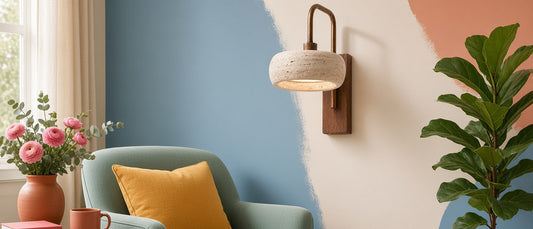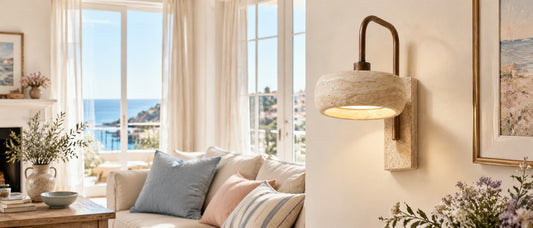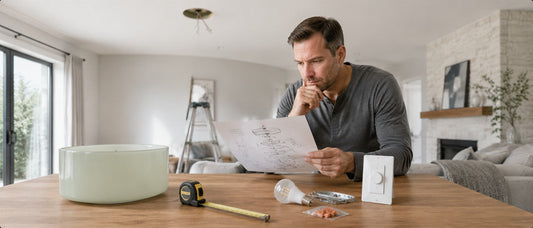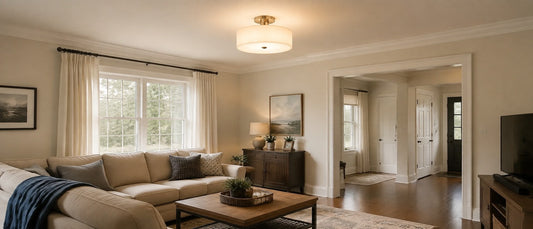
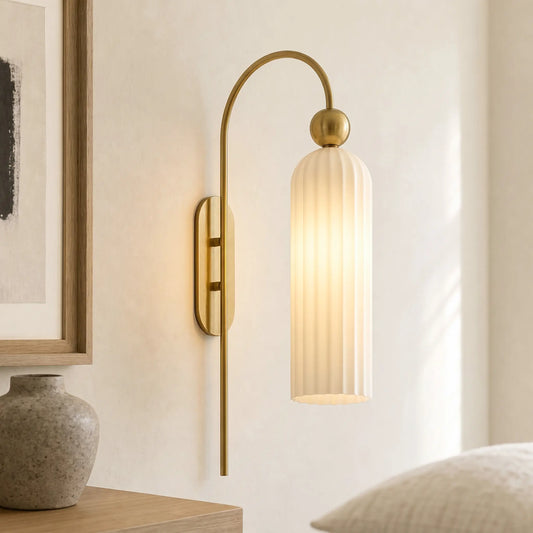
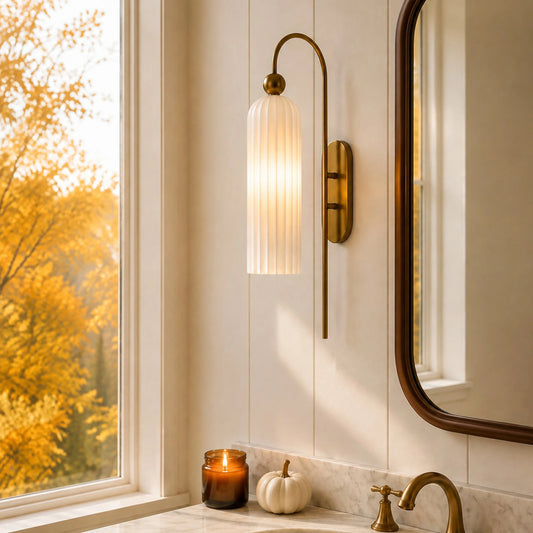

If you are wondering how to fill an awkward blank wall, do not begin by shopping for decor. First decide whether the wall is missing light, a visual subject, a furniture anchor, or nothing at all. A wall sconce works only when light is part of the problem and the fixture can relate to something nearby.
The fastest test is to view the wall from the doorway, the main seat, and after sunset. Those three views reveal whether the wall feels empty because of scale, poor furniture placement, a dark edge, or an object that is already too isolated.
How to Fill an Awkward Blank Wall at a Glance

- Choose art when the wall needs a clear subject.
- Choose furniture when the wall lacks a base or useful activity.
- Choose a wall sconce when the area disappears after dark or needs task light.
- Choose negative space when the room already has enough visual weight.
Instead of centering a sconce on the entire wall, center it on the chair, console, artwork, or other feature it is meant to support. If no useful relationship appears, the wall probably needs a different solution.
If the same wall is making a compact room feel flat, use How Decorative Wall Lights Create More Depth in Small Spaces to check depth, shadow, and circulation before adding another object.
Five Awkward Wall Scenarios and What Usually Works

An empty wall behind a sofa
Use the sofa as the reference line, not the full wall. Large artwork often solves a scale problem more directly. A pair of sconces can frame art or the seating zone, but a single fixture floating above the sofa rarely fills a wide composition by itself. Mark the sofa center and outer edges with removable tape before choosing anything.
A blank entryway or narrow hallway wall
An entry wall needs to survive movement, bags, coats, and an opening door. A shallow console, mirror, or artwork may provide the missing anchor. Add a sconce only where its projection will not narrow the route. On a narrow return wall, one vertical fixture can work well because it gives the eye a destination without using floor space.
An empty wall beside a single chair
This is one of the strongest uses for a single sconce because the chair creates a clear activity zone. Align the light with the seat rather than the wall. Sit in the chair and check that the light source is not directly in your eyes and that the switch can be reached without twisting behind the furniture.
A wall above a console or dining sideboard
The furniture already provides visual weight, so the remaining question is whether the upper wall needs art, a mirror, or light. One off-center sconce can support an asymmetrical arrangement. A pair is more convincing when the cabinet and everything above it are deliberately symmetrical. Keep doors and serving space clear.
A wall with artwork that still feels unfinished
Before adding lights, enlarge the artwork outline with paper. The frame may simply be too small. If the scale is right but the wall disappears at night, sconces can support the art. Test reflections, shadows, and whether the fixture competes with the image. Art and lighting should read as one group.
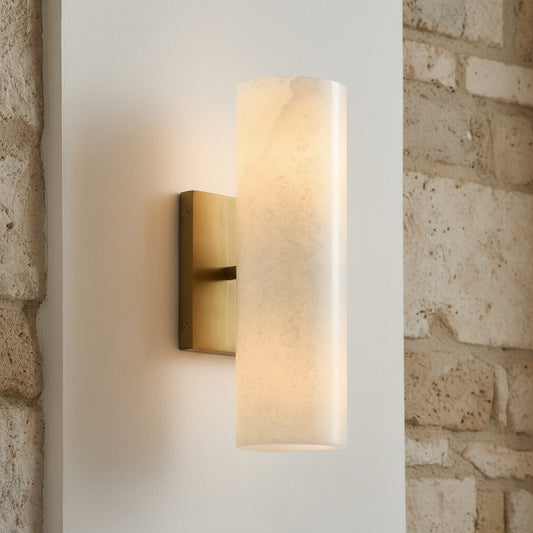
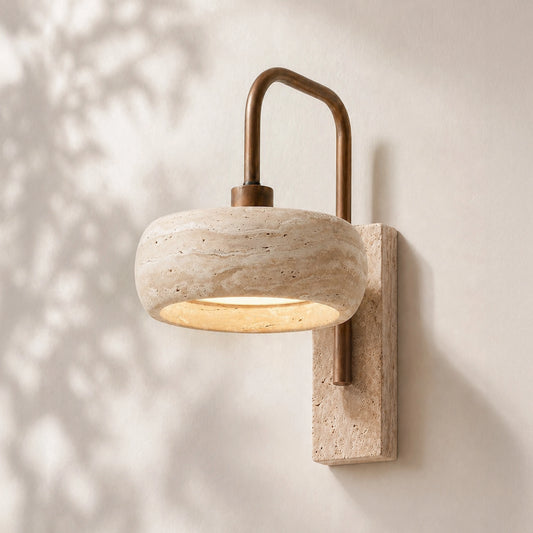
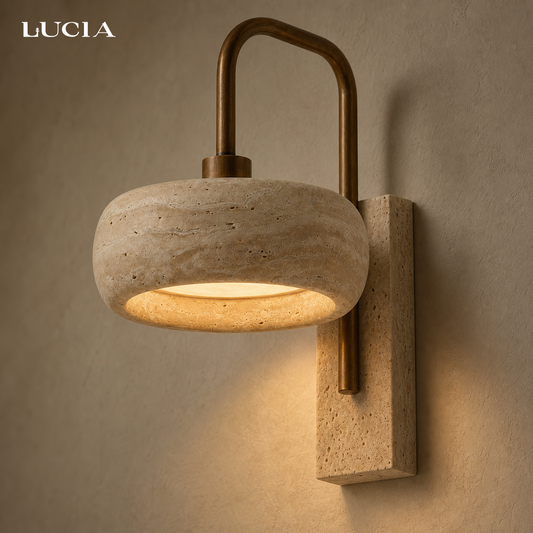
Once a real wall zone has been identified, compare its paper outline with Tavik's listed 20 x 36 x 27 cm profile. The 27 cm projection matters as much as the front view, especially beside a doorway, console, or chair.
Set Wall Sconce Height, Spacing, and Alignment

There is no universal wall sconce height for every fixture and room. For general living-room, entryway, or hallway accent lighting, 152 to 183 cm from the finished floor to the fixture center is a useful mock-up range. Start near 165 cm, then adjust for the fixture's height, the household's eye level, nearby furniture, glare, and the manufacturer's installation instructions.
Above a console or sideboard, judge the gap from the furniture top to the lowest visible part of the fixture. It should feel connected without crowding objects placed on the surface. Beside a chair, seated eye level and the direction of the light matter more than a standard floor measurement.
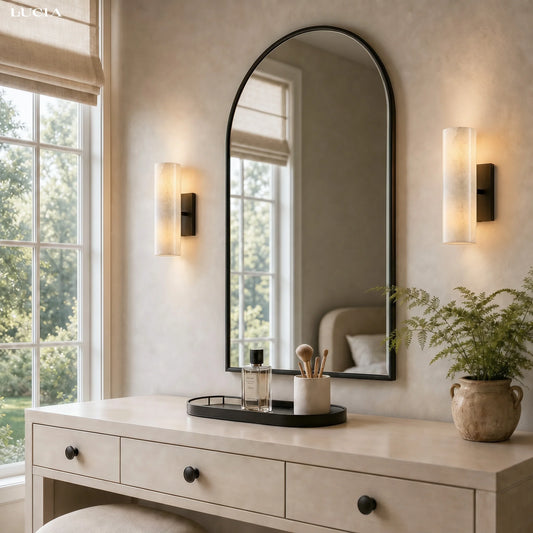
For two sconces around centered furniture, place each paper centerline about one-quarter of the furniture width in from either end. This creates a center-to-center distance of about half the furniture width. Treat that as a visual starting point, then move the templates to suit the fixture width, artwork, and room.
When the wall belongs to a reading chair, Creating a Calm Reading Corner with Wall Sconces and Natural Materials provides the more specific seated glare, switch-reach, and page-light checks.
Choose One Sconce or Two

Choose one sconce for an asymmetrical console, a single chair, a narrow wall beside a doorway, or a wall where art already carries most of the visual weight. One fixture can feel intentional when its job is clear.
Choose two when the room already has a strong centerline: a symmetrical sideboard, fireplace, bed, or large artwork. Do not add a pair only because the wall is wide. If the furniture sits off-center, forcing symmetry onto the wall can make the whole room feel less balanced.
When a Wall Sconce Is the Wrong Answer
Use art when the wall needs identity in daylight. Use a console, bench, or shelf when the area lacks function or a visual base. Leave the wall open when it separates several strong patterns, windows, or statement pieces. A fixture that adds no useful light or relationship simply makes the wall busier.
Renters should confirm lease and electrical restrictions before planning a hardwired light. A floor lamp, plug-in fixture approved for the space, removable artwork, or a furniture change may solve the same problem without permanent work. Never treat adhesive mounting as a substitute for the fixture's required installation method.
Test Wall Sconce Placement Without Drilling

Cut a full-size paper outline of the visible fixture and backplate. Add a lightweight cardboard box that matches the listed depth. Tape the model to the wall for at least one day, then inspect it in daylight and after dark from the doorway, sofa, chair, and normal walking route.
- Open every nearby door, cabinet, and curtain.
- Walk past the model while carrying a laundry basket or serving tray.
- Sit down and check whether the shade or bulb enters your direct sightline.
- Photograph the wall from the room entrance; a phone image often exposes poor scale.
- Have a qualified installer confirm the junction box, wiring, mounting, and final position.
For a real scale check, use the Tavik product dimensions and material options. The product page lists travertine and wood, an included LED source, and a non-dimmable configuration. Confirm that the fixed light behavior and current variant suit the room before installation.
Final Decision Checklist
- Can you name the problem as light, art, furniture, scale, or balance?
- Does the sconce align with a real zone rather than the geometric center of the wall?
- Have you tested front width, full depth, seated glare, and walking clearance?
- Would one fixture look intentional, or does the existing architecture support a pair?
- Does the wall still work in daylight, when the sconce contributes no visible glow?
If the answer to those checks is unclear, pause before wiring. The right solution may be larger art, a better furniture position, or deliberate empty space. Buy a wall light only when it improves both the room's use and its evening composition.
Awkward Empty Wall FAQs
What should I put on an awkward empty wall?
Start with the missing role. Choose art for a visual subject, furniture for function and weight, a mirror for reflection, or a wall sconce when the wall needs useful evening light. If the room is already visually busy, leave part of the wall empty.
Where should a wall sconce go on a blank wall?
Align it with the chair, console, artwork, bed, or architectural edge it supports. Do not automatically center it on the wall. View the paper template from the main doorway and seat before fixing the final position.
How high should a wall sconce be in a living room?
For general accent lighting, test the fixture center between 152 and 183 cm above the finished floor, with about 165 cm as a practical first mock-up. Adjust for fixture size, furniture, sightlines, ceiling height, household members, and installation instructions.
Should I use one wall sconce or two on a large wall?
Use one when the composition is asymmetrical or supports one chair or narrow zone. Use two when furniture, art, or architecture has a clear centerline. Wall width alone is not a reason to install a pair.
Why does the wall still look empty after adding a sconce?
The fixture may be too small, too high, or disconnected from the furniture. Test a larger artwork outline or a low console before adding another light. The missing element is often visual weight rather than fixture quantity.
How can renters improve an awkward wall without permanent wiring?
Reposition furniture, use large removable artwork, add a floor lamp, or consider a properly rated plug-in light if the lease allows it. Confirm mounting and cord requirements; removable adhesive should not carry a hardwired fixture.
Once the full-size mock-up has passed the height, depth, glare, and circulation checks, review the current listing before ordering.
Tags: