

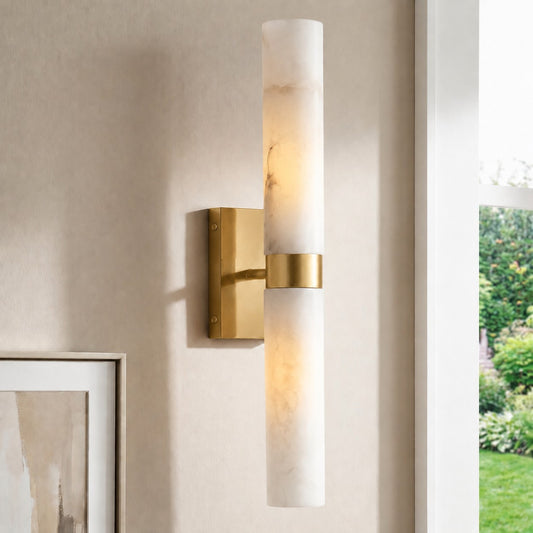


For years, residential lighting was described mainly in functional terms: enough light to cook, read, clean, or walk safely. Those needs still matter, but modern interiors are increasingly judged by how they feel at different times of day. Emotional lighting is the shift from treating light as a utility to treating it as part of the room’s atmosphere, rhythm, and identity.
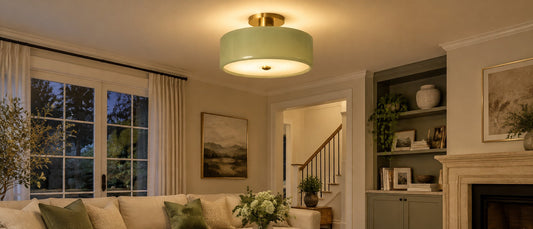
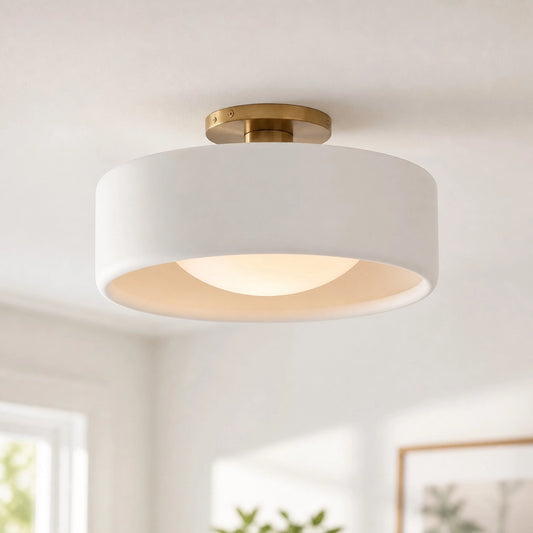
That does not require dramatic color-changing technology. It begins with ordinary decisions about brightness, glare, material, scale, and control. A semi-flush drum light, such as the Evron Modern Drum Glass Porcelain Semi-Flush Mount Ceiling Light, can support this approach because its form is present enough to shape the room while remaining compact enough for everyday living. Check the live product page for current specifications before making performance claims or ordering.
What emotional lighting actually changes

For a material-first ceiling-lighting layer, explore the Evron glass and porcelain semi-flush design and verify the current technical details.
Functional lighting answers “Can I see?” Emotional lighting adds “How do I want to feel while I am here?” A living room may need clear ambient light when people arrive, softer reflected light during dinner, and a lower-contrast setting for winding down. The room is physically the same, but the lighting tells the body that the activity has changed.
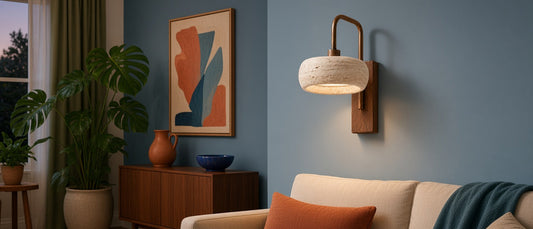
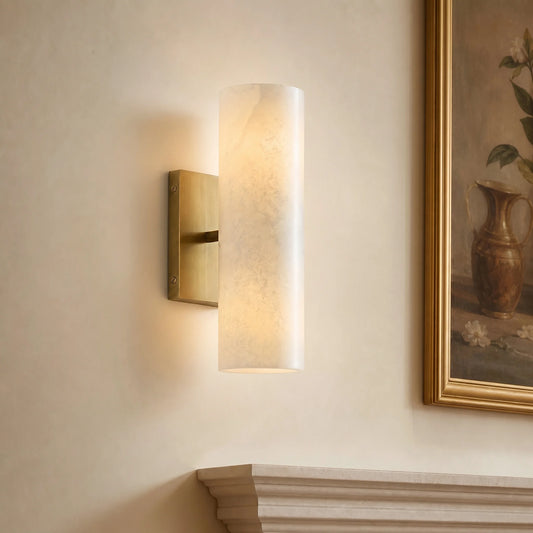
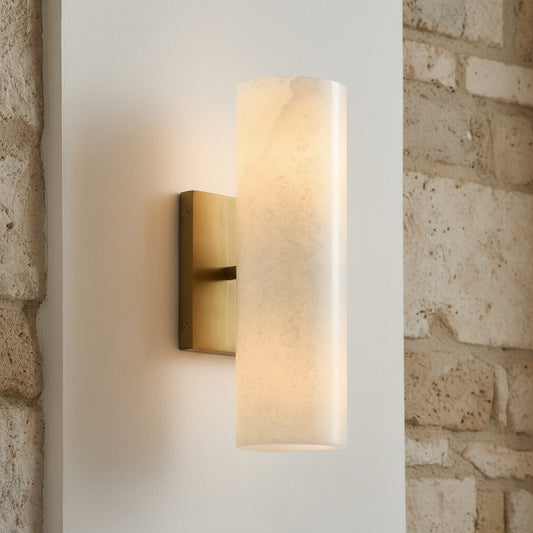
The effect comes from relationships rather than a single fixture. A ceiling light establishes the room’s baseline. A lamp near a sofa supports conversation or reading. Light on a textured wall gives the eye somewhere to rest. When these layers are balanced, the space feels intentional without looking staged.
Why material matters as much as brightness

A bare source can feel sharp even when it is not technically too bright. Diffusing materials change how the light reaches the eye and how the fixture reads when it is switched off. Glass can soften and transmit light, while porcelain introduces an opaque, tactile surface. The combination can make a ceiling fixture feel more like a piece of the interior than a piece of equipment.
Material also affects memory. A translucent shade may recall daylight, while a ceramic surface can suggest craft and permanence. These associations are subtle, but they help explain why two fixtures with similar output can create very different rooms. In compact homes, the same material choices can also support the visual openness described in The Best Ceiling Lighting Ideas for Apartments That Need to Feel Bigger and Brighter.
Three ways to use emotional lighting at home

When you are ready to compare scale and finish, use the Evron product page as a concrete reference rather than choosing from mood alone.
Create a gentle arrival scene
Use the ceiling fixture as the first layer when you come home, but avoid lighting every corner at maximum intensity. Add a small lamp near the entry or living area so the eye moves through a sequence of light rather than landing on one bright source.
Separate work from rest
During focused tasks, a clear ambient layer prevents the room from feeling cave-like. When the task ends, switch emphasis to lower lamps and reflected light. This change helps a multi-use apartment feel as though it has more than one room.
Make social spaces feel closer
A dining table or seating group benefits from light that gathers people without flattening every surface. Keep the ceiling source controlled, then add a side lamp or wall wash to create depth around the group.
Avoid the common emotional-lighting mistakes
The first mistake is confusing dimness with atmosphere. A room that is simply too dark can feel tiring and unsafe. The second is using one color temperature everywhere, which removes the contrast that makes layers legible. The third is selecting a statement fixture that overwhelms the room’s scale. Emotional lighting still needs proportion, clear circulation, and enough light for the task at hand.
Start with the room’s daily sequence: morning, work or school hours, dinner, and late evening. Decide which layer should lead in each moment. Then verify that the fixture’s controls, lamping, and installation conditions support that plan. When those details are unknown, refer to the manufacturer’s documentation and use a qualified electrician for installation questions. The practical checks in Why the Right Ceiling Light Can Change the Way Your Home Feels Every Evening can help turn that mood plan into a fixture shortlist.
The Evron product page offers a concrete reference for a material-led semi-flush direction. Compare its confirmed specifications with your room, control, and installation requirements before deciding.
Frequently asked questions
Is emotional lighting the same as smart lighting?
No. Smart controls can help, but emotional lighting is mainly about layers, contrast, material, placement, and timing.
Do I need colored bulbs to create atmosphere?
Usually not. Warm-neutral light, diffusion, and well-placed secondary sources can create a richer atmosphere without saturated color.
What should the ceiling light do in an emotional-lighting plan?
It should establish a comfortable ambient base that can lead earlier in the day and recede when lamps or reflected light become more important.
How do I keep atmospheric lighting practical?
Keep pathways and task surfaces adequately lit, use controls you will actually operate, and confirm installation requirements before purchase.
Tags:
Previous
The Best Ceiling Lighting Ideas for Apartments That Need to Feel Bigger and Brighter
Next
Why the Right Ceiling Light Can Change the Way Your Home Feels Every Evening