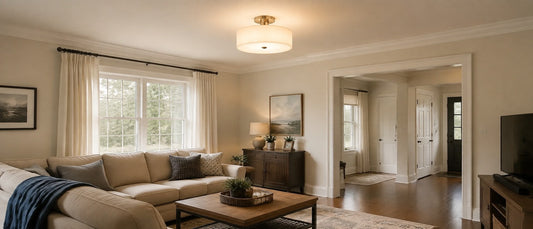

The open-plan layout is the hallmark of modern American living. It offers a sense of freedom, better airflow, and a connected environment for families. However, as any lighting expert will tell you, the biggest challenge of an open-concept home is "visual clutter." Without walls to define spaces, furniture and fixtures can quickly feel like they are floating aimlessly or, worse, crowding the room.
Achieving visual balance in a large, multi-functional room requires a delicate touch. You need elements that have a presence but don't act as a visual roadblock. This is exactly where glass lighting—and specifically the use of colored glass floor lamps—becomes a designer's secret weapon.
The "Ghost" Effect: Why Glass Works in Large Rooms
In a traditional room, you might choose a heavy metal or solid wood lamp to act as an anchor. In an open-plan space, a solid, opaque fixture can interrupt the "sightlines"—the clear view from one end of the room to the other. When sightlines are blocked, the room feels smaller and more fragmented.
Glass fixtures provide what we call the "Ghost Effect." They occupy physical space and provide necessary light, but because they are translucent, the eye travels right through them. This allows the room to feel cohesive and expansive. A piece like the Sanae Modern Round Shade Colored Glass Floor Lamp is the perfect example. Its round, colored glass shade provides a pop of personality without the "heaviness" of a traditional fabric or metal shade.
Further reading:How Should Lighting Be Planned in Open-Concept Spaces
Zoning Without Walls: Creating "Islands of Light"
One of the most common mistakes in open-plan lighting is relying solely on recessed ceiling lights. This creates a flat, "commercial" feel. To make a home feel lived-in and balanced, you must create "zones." For instance, your dining area should feel distinct from your lounge area, even if there is no wall between them.
Floor lamps are the most effective tool for "zoning." By placing a floor lamp next to an armchair or at the edge of a sectional sofa, you create a visual boundary. Colored glass adds an extra layer to this strategy. The subtle tint of the glass can harmonize with your throw pillows or area rugs, pulling the "zone" together into a single, balanced unit.

When you use the Sanae Modern Round Shade Floor Lamp, the colored glass acts as a bridge between your furniture and the architecture of the room. It adds a sophisticated "light luxury" feel that anchors the seating area while maintaining that airy, open-concept vibe we all love.
Scale and Proportion: Choosing the Right Height
In high-ceilinged open spaces, small lamps tend to "disappear." You need height to command attention. A floor lamp should typically stand between 58 to 64 inches to be functional for both reading and ambient lighting. However, the width of the shade also matters. A round glass shade offers a soft, organic contrast to the hard angles usually found in kitchens and dining tables.

Visual balance isn't just about color; it's about the interplay of shapes. If your kitchen has sharp, rectangular island counters, a round glass floor lamp in the adjacent living area softens the transition, making the entire floor plan feel more balanced and intentional.
Further reading: Choosing the Right Size of Glass Floor Lamp for Your Space
The Interplay of Natural and Artificial Light
Open-plan homes usually feature large windows. During the day, glass lamps catch the natural sunlight, creating beautiful reflections and "dancing" colors across the room even when they are turned off. This "passive decoration" is something opaque lamps simply cannot offer.

As the sun sets, the transparency of the glass shade allows the light to radiate in 360 degrees, filling the surrounding space with a warm, even glow. This prevents "dark corners" that can make open-plan areas feel spooky or unfinished at night.

Conclusion: The Art of Invisible Design
True visual balance in a home is often felt rather than seen. It’s the feeling that everything is in its right place and the room "breathes" easily. By incorporating glass elements like the Sanae Modern Round Shade Colored Glass Floor Lamp, you are embracing a design philosophy that values both style and space.
Don't let your open-plan home feel cluttered or cold. Bring in the transparency, color, and sophisticated balance that only high-quality glass lighting can provide.
Balises:
Précédent
The Low-Ceiling Dilemma: How Glass Ceiling Lights Can Transform Your Space
Suivant
The Science of Softness: How Glass Lampshades Shape Your Home’s Atmosphere