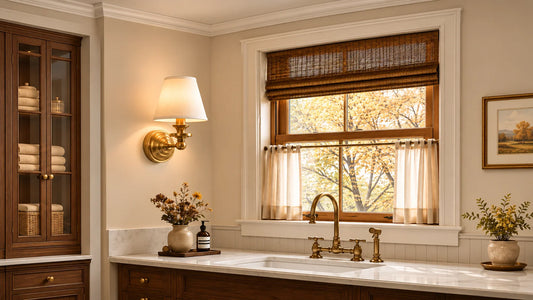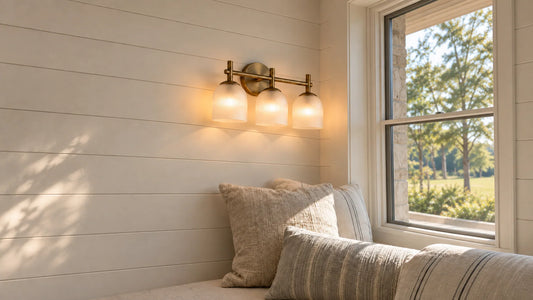
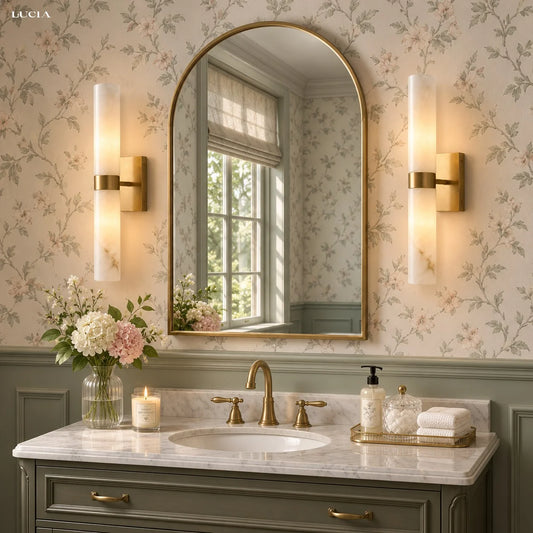

A bathroom mirror can have a handsome sconce and still be a poor place to see your face. The light may fall on the wall, catch the shade, or shine into the eyes of the person beside you, while the mirror itself stays uneven.
Side lights are not automatically better than one light overhead. They help when the brightest point stays out of normal view and the fixture does not crowd the person standing at the sink. Bathroom Vanity Lighting: Side Sconces or Overhead? separates those two jobs. The shade, and the space the arm takes, decide which one you actually have.

The shade changes the face in the mirror.
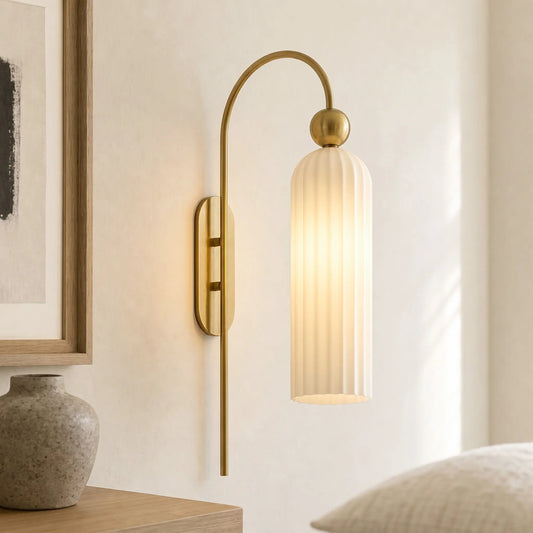
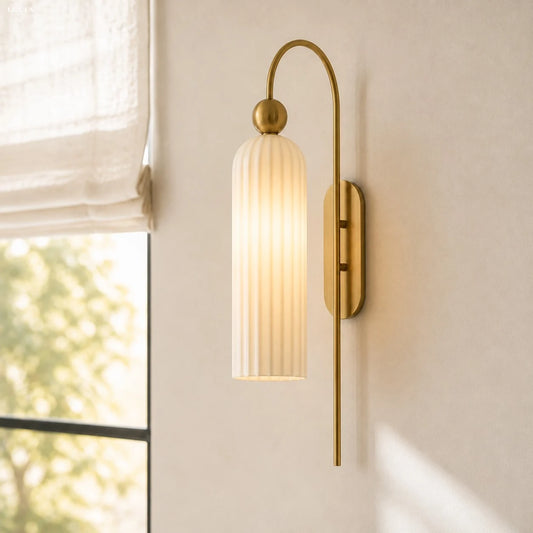
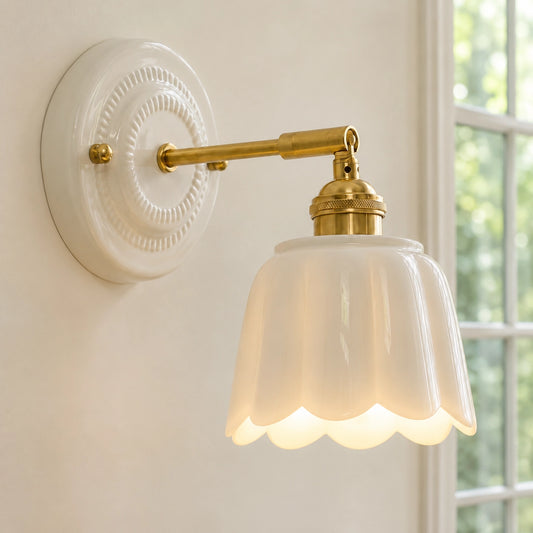
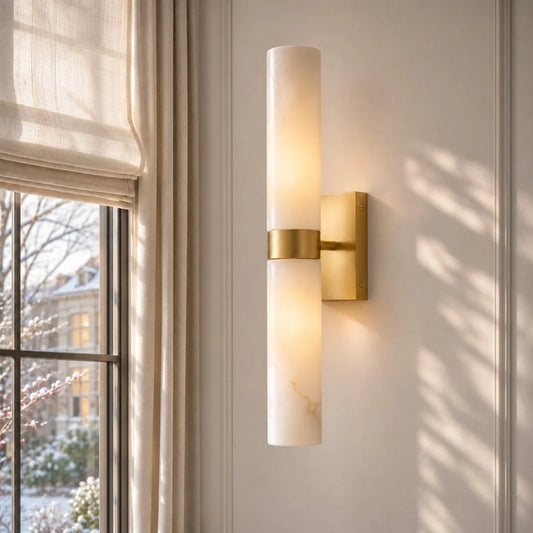
Azura is a useful example because the page is plain about the glass. Milk glass is white and finely fluted, and the ribs continue to an open lower rim. Clear glass shows the bulb. Gray glass is a smoky version of that fluting. Hammered glass is clear, with an irregular surface, and the bulb remains visible. At a mirror, that is not a style detail. A hidden source is easier to stand in front of. A visible bulb can become the brightest thing in the room.
The page also says the illuminated look depends on the bulb. Each sconce takes one E26 bulb, 40 watts maximum, sold separately. Stand at the sink, look into the mirror, and then turn toward the shade. If the bulb or the open rim catches your eye, change the shade or the height before you change the decor.
The arch is part of the room.

The illustrated frame is 21.1 inches high and 10.4 inches across. The shade is 3.9 inches in diameter and 11.8 inches high. The backplate front is 4.7 inches wide by 7.9 inches high. Those numbers describe the object on the wall. The page asks you to confirm that clearance, and it is the part most likely to make a narrow vanity feel tight.
Walk past the proposed place with a towel or a bag. Open the cabinet. If you have to turn a shoulder, the sconce is in the path, however well it photographs. How Decorative Wall Lights Create More Depth in Small Spaces makes the same test: depth is useless if the fixture makes people move around it.
Beside a bed, the job is quieter.

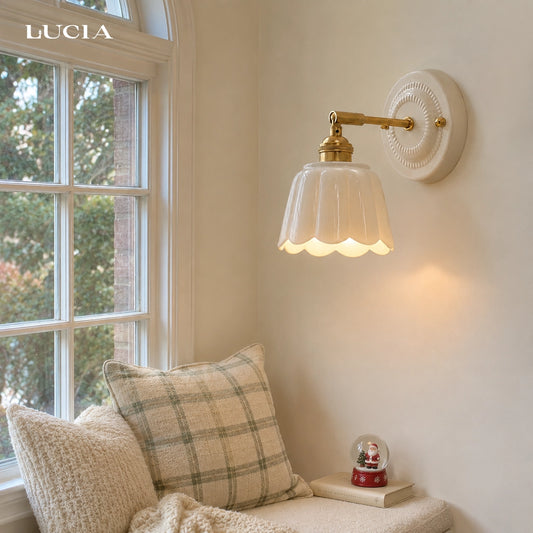
The page lists bedrooms, living rooms, and entryways, and it shows one sconce beside a bed. There the question is no longer the face in a mirror. It is whether the shade can mark the side of the bed without becoming the only bright object in the room.
Sit where you would read. If the open rim is in your eyes, the position is wrong. If the nightstand is already full, a wall light can be the reason not to add another table lamp. Why Your Bedroom May Need Wall Lighting Instead of Another Table Lamp is the more specific comparison. Do not treat a sconce as automatic reading light. The page does not describe a directed task beam.
One light needs a reason. A pair needs a center.

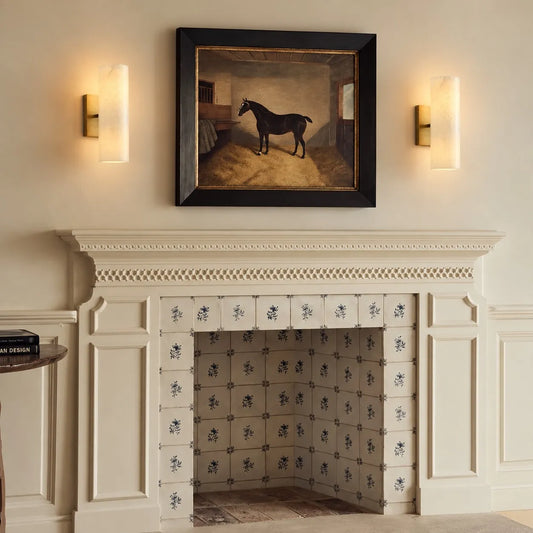
The page guides sconce quantities. Use one for accents: console, nook, bedside. Pair them beside mirrors, art or beds. For a 36-inch mirror, mount level with fixture clearance. Long-wall center spacing: 48–72 inches; sample layout: 60-inch gap, 30-inch side margins. These are not fixed rules.
A lone sconce on an empty wall often looks misplaced. It needs context: a chair, mirror, console or shelving. Read What to Put on an Awkward Empty Wall: When a Wall Sconce Actually Works for this common styling mistake, and The Most Common Mistakes People Make When Choosing Wall Sconces for mounting height tips, as no single height rule fits all.
Some choices are visible only after you order two.
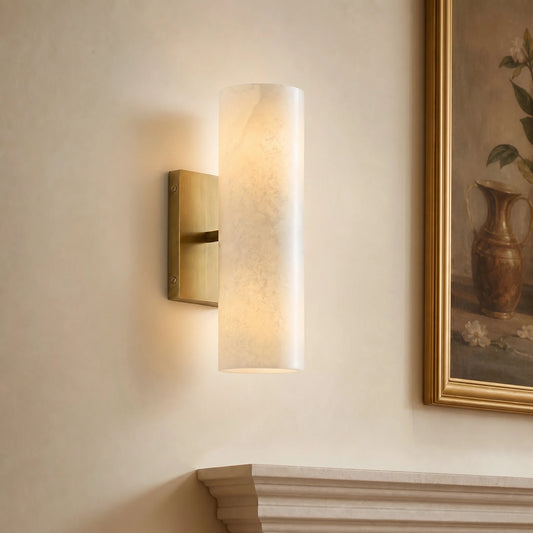
Milk, clear and gray glass have fine fluting; hammered glass exposes the bulb. Alabaster has veining, and travertine will not match perfectly. Glass and alabaster come with gold frames; travertine uses darker metal. Check your shade photo for finish reference.
Rated 110–120V for dry indoor use, available as hardwired or plug-in. Glass styles: $149 hardwired ($279 pair), $159 plug-in ($289 pair). Travertine from $179 hardwired, alabaster from $246. Use an electrician for hardwiring. Dust when cool; do not soak stone.
Confirm the shade, the metal, and the live price
A few checks
Before the fixture becomes the answer.
Does a side sconce always beat an overhead light?
No. It helps at a mirror when the bulb stays out of your eyes and the arch clears the way you stand. Overhead light can still be the calmer choice in a tight vanity.
Which shade hides the source?
Milk and gray glass diffuse the bulb through fluting. Clear and hammered glass leave it visible. Alabaster and travertine are stone, and two stones will not look identical.
How wide is the arch?
The illustrated sconce is 21.1 inches high and 10.4 inches across. Projection from the wall is not given as one number. Confirm the full frame before you order.
How do I clean this sconce?
Wipe once fully cooled. Do not soak travertine or alabaster stone. A dry soft cloth works best for glass and metal finishes.
Tags:
Vorherige
How to Place a 15-Inch Table Lamp on a Nightstand, a Console, and a Desk
Nächste
Why a Vintage Milk Glass Wall Sconce Still Shapes the Room When It Is Off