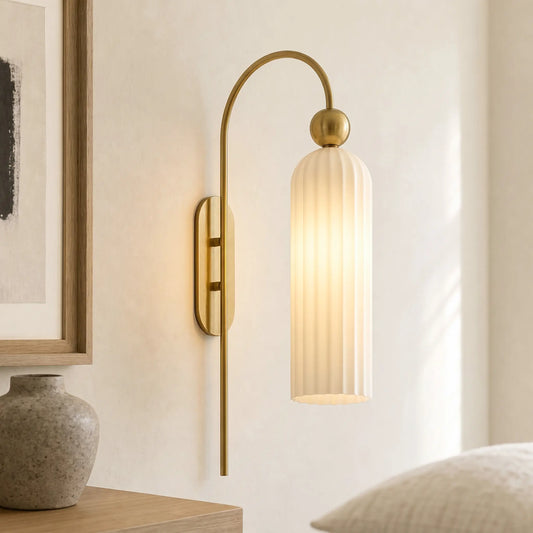
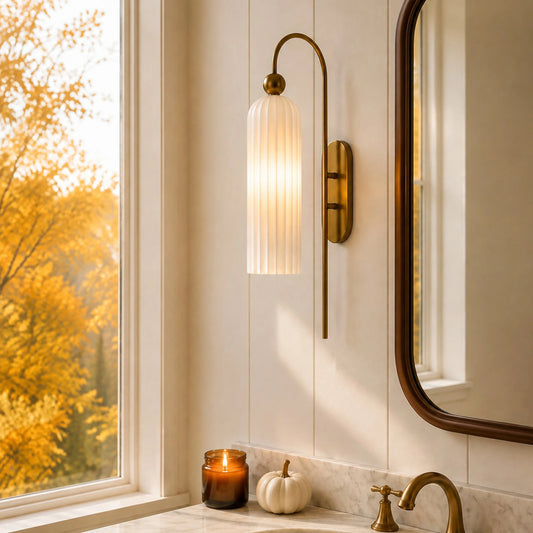

Learning how to place wall lights in a small room starts with a simple diagnosis: find the wall that disappears after sunset. Lighting that vertical plane can add a second visual distance, reveal texture and make the room feel deeper without adding furniture.
Placement matters more than brightness. Check the fixture from the doorway and main seat, protect the walking route, and keep the brightest opening outside normal eye level before you decide that a decorative wall light is the right answer.
Quick Answer: Use the Wall to Create a Second Visual Plane

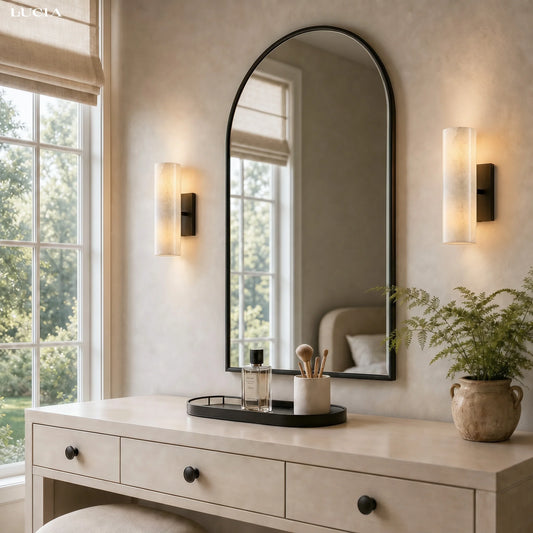
A wall sconce adds depth when it separates the near wall from the background. Soft light across plaster, wood, stone, artwork, or a curtain edge gives the eye more than one distance to read. The room begins to feel layered even though its physical dimensions have not changed.
This works best when the sconce supports an existing zone such as a chair, console, bedside area, or short hallway. A light installed only to fill an empty patch can become another isolated object.
Diagnose the Room Before Choosing a Fixture

Test 1: Find the wall that disappears after sunset
Turn on the lights you normally use and stand at the doorway. Look for a side wall or corner that becomes a dark boundary while the ceiling remains bright. That is a stronger candidate than the wall that already receives daylight, television glow, or a table lamp.
If the wall still feels unresolved after the lighting test, use What to Put on an Awkward Empty Wall: When a Wall Sconce Actually Works to decide whether the real problem is scale, furniture or a missing focal point.
A recurring homeowner complaint is that a sconce looked correct while standing but felt glaring or oddly high from the sofa. Check both standing and seated eye lines with the room's other lights on; the useful position is the one that works in the evening, not just on an empty wall.
Test 2: Check whether the wall needs light or an anchor
Test 3: Protect the walking route
Measure from the finished wall to the farthest point of the fixture. Then walk the route carrying a bag, laundry basket, or dining chair. A beautiful sconce that makes people turn their shoulders will make a small room feel tighter, not deeper.
After the wall passes the depth and clearance checks, compare the mock-up with Tavik's listed dimensions and projection. This keeps the product decision tied to the real route and sightlines instead of a styled photograph.
Test 4: Review seated and doorway sightlines
Tape a paper outline to the wall and view it from the sofa, dining chair, and doorway. The fixture should connect with the zone without blocking artwork, sitting at eye level like an obstacle, or appearing too small for the wall.
Build Depth with Light, Not Maximum Brightness

Depth depends on contrast. If the ceiling light, wall light, and portable lamps are all equally bright, the room can still look flat. Let the wall sconce create a quieter vertical layer while the main light supports circulation and a nearby lamp handles close work.
- Use a diffused or shielded source when the fixture sits near normal eye level.
- Allow some gentle shadow around textured plaster, stone, timber, or artwork so the surface remains dimensional.
- Keep adjacent corners visible rather than turning the sconce into a bright isolated spot.
- Judge the result at the time of day when the room usually feels smallest.
Cool, intense light is not automatically more spacious. Comfortable depth usually comes from controlled contrast, visible wall texture, and enough ambient light to keep the rest of the room legible.
For a task-focused version of the same seated glare test, continue with Creating a Calm Reading Corner with Wall Sconces and Natural Materials.
Choose Scale, Projection, and Material Together
Small rooms do not always need tiny fixtures. A narrow vertical form can have useful presence without occupying much wall width, while a shallow backplate and controlled projection protect circulation. Compare the complete installed outline, not only the face shown in a product photograph.
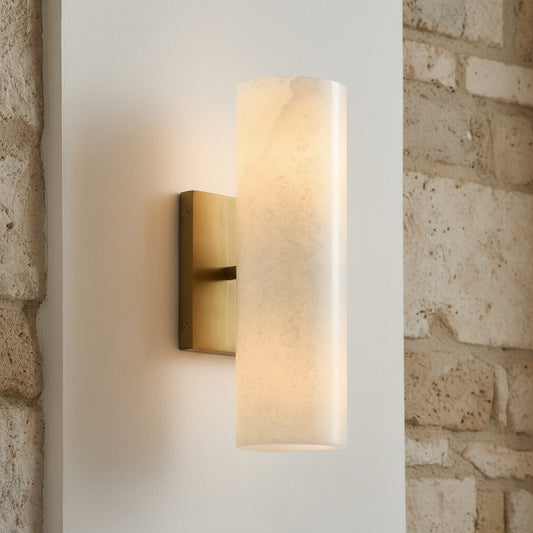
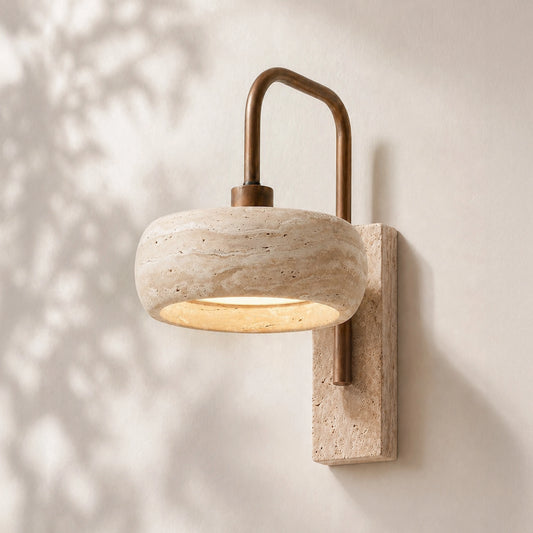
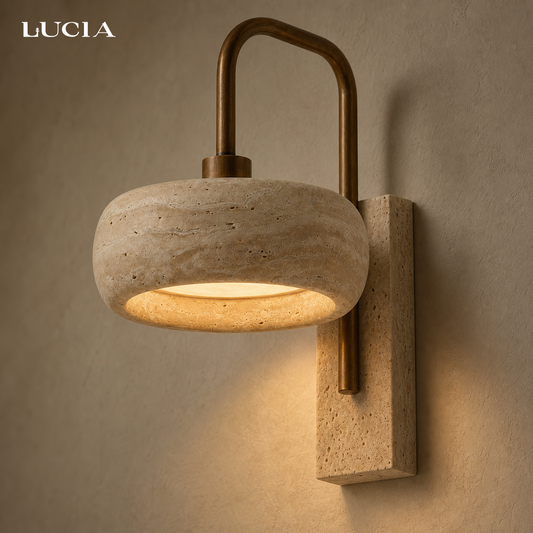
Tavik is listed in travertine and wood at about 20 x 36 x 27 cm, with an included LED light source and a non-dimmable configuration. Natural stone pores, veining and color variation are material characteristics.
The Tavik Vintage Rustic Travertine Stone Cylinder Wall Sconce is a useful visual example because its vertical cylinder and natural-stone character can add texture to a plain wall. Before buying, confirm the current product dimensions and installation details, then reproduce the full outline with paper or cardboard at the proposed position.
Natural variation should look intentional beside the room's existing materials. Repeat one related temperature or texture elsewhere, such as pale stone, warm wood, linen, or a muted metal detail. Avoid introducing several competing feature materials into the same compact view.
Give the Sconce One Useful Job

A sconce feels integrated when it helps a real activity. It can mark the edge of a seating area, soften a dining corner, support a console, or make a narrow passage feel considered. Assigning one job also makes height and brightness easier to judge.
A No-Drill Small-Room Test

Cut a paper or cardboard template to the fixture's complete visible dimensions. Build out the listed projection with a lightweight box, tape the model securely at the proposed position, and leave it in place for an evening. Walk past it, sit below it, open nearby doors, and observe the wall with the rest of the room lighting on.
Reject the position if the mock-up crowds the route, competes with the main focal point, creates direct glare, or still appears disconnected from furniture. A ten-minute product decision becomes much more reliable when the room has been allowed to answer back.
Review Tavik before finalizing placement
Frequently Asked Questions
Where should wall sconces be placed in a small room?
Place them where a dark wall needs depth and where the light can support a real zone, such as a chair, console or bedside. Test the position from the doorway, main seat and nearest walking route before wiring.
How high should wall sconces be in a living room?
There is no universal height. Start near standing eye level, then adjust for seated sightlines, shade opening, furniture height and projection. A paper mock-up is more reliable than applying one number to every room.
How far should a wall sconce be from artwork?
Leave enough space for the fixture and artwork to read as separate objects. Mock up both full outlines and check for frame glare; the correct gap depends on their scale, the beam direction and the view from normal seating.
Are wall sconces worth it in a small room?
They can free tables and floors while adding useful vertical light. They are worthwhile only when projection, glare, wiring and switch access suit the room; a bulky fixture in a narrow route can make the space feel tighter.
Balises: