
We have all been there. You spot a gorgeous lamp online, fall in love with the design, and wait anxiously for the delivery truck. But when you finally set it up next to your sofa, something feels… off. Maybe it towers awkwardly over your armchair, or perhaps it looks tiny and lost in the corner of your high-ceilinged living room.
In interior design, scale is everything. While style is subjective, proportion is mathematical. Getting the size right is the difference between a room that feels professionally curated and one that feels cluttered or disjointed.
Glass floor lamps are particularly unique beasts when it comes to sizing. Because they are transparent or translucent, they carry less "visual weight" than solid metal or ceramic lamps. This gives you a bit more freedom, but there are still golden rules you should follow.
In this guide, we will walk through exactly how to measure and select the right glass floor lamp to elevate your home.
1. The Golden Rule of Height: Eye Level Alignment
The most common question I get as a lighting specialist is, "How tall should my floor lamp be?" The answer depends entirely on what you are doing while the lamp is on.
For Seated Activities (Reading and Lounging)

If your lamp is positioned next to a sofa or armchair, the bottom of the lamp shade should typically be at or slightly below your eye level when you are seated. This prevents the glare of the bare bulb from hitting you directly in the eyes.
Most standard sofas have a seat height of around 18 to 20 inches. A good rule of thumb is that the bottom of the shade should be roughly 40 to 48 inches from the floor. This usually means looking for a lamp with a total height between 58 and 64 inches.
Further reading: How to Choose Lighting Based on Room Size
For Ambient Lighting
If the lamp is tucked into a corner to provide general glow rather than task lighting, you can go taller. However, be wary of ceilings. You generally want at least 12 to 18 inches of clearance between the top of the lamp and your ceiling to let the light breathe.
2. Visual Weight: The "Glass" Advantage
Here is where material choice becomes your secret weapon. If you are working with a smaller apartment or a room that already feels full of furniture, a solid brass or heavy ceramic lamp can make the space feel claustrophobic. It creates a visual block.
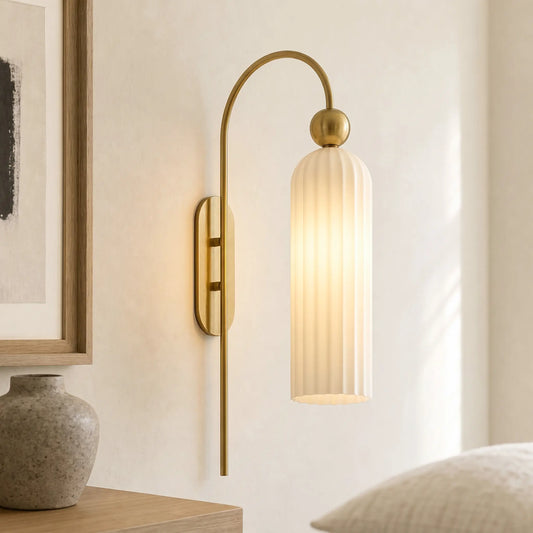
Glass, however, allows light and sightlines to pass through. A textured glass shade adds character without adding bulk. This is why we often recommend fixtures like the Lumi Vintage Opal Textured Glass Eloise Floor Light for modern living spaces. The opal texture diffuses light softly, expanding the sense of space, while the slender profile ensures it fits into tight corners without dominating the room.

3. The Footprint: Base Size vs. Floor Space
Don't just look up; look down. The base of the lamp dictates where you can actually place it. I have seen many people buy tripod lamps for small corners, only to realize the legs splay out 20 inches wide, tripping anyone who walks by.
- For tight corners (behind sofas, between chairs): Look for a weighted, circular, or square flat base. These can slide partially under furniture if necessary.
- For open spaces: You can afford wider, more decorative bases.
If you are trying to nestle a light between an accent chair and a bookshelf, measure that gap before you buy. A lamp with a slender stem and a compact base, like the Eloise mentioned above, is often the most versatile choice because it requires very little floor real estate to make a big impact.

4. Shade Proportion and Balance
A floor lamp is a relationship between the base and the shade. If the shade is too large, the lamp looks top-heavy and unstable. If it’s too small, the lamp looks like a lollipop.
For glass floor lamps, the "shade" is often a globe or a structured glass element. The scale of this glass element should relate to the furniture next to it. A massive 20-inch glass globe might look fantastic in a hotel lobby, but next to a delicate mid-century modern loveseat, it will look overwhelming.
Aim for a glass element that complements the scale of your furniture arms. If your sofa has chunky, rolled arms, a slightly more substantial glass fixture works. If your furniture is sleek and minimal, a refined, textured glass cylinder or oval shape creates better harmony.
5. Case Study: Balancing Height and Texture
Let’s imagine a typical scenario. You have a reading nook with a velvet armchair and a small side table. You want light, but you don't want a lamp that screams for attention.
A metal task lamp might feel too "office-like." A fabric shade might feel too traditional. This is where the specific dimensions of a textured glass lamp shine. You want something tall enough to cast light over your shoulder (60+ inches), but with a shade diameter that keeps the light contained to your nook (under 12 inches).
The Lumi Vintage Opal Textured Glass Eloise Floor Light fits this mathematical ideal perfectly. It utilizes verticality—drawing the eye up—while the textured glass softens the output, ensuring the light serves the space rather than blinding the reader.
Further reading:Height & Scale Matching Formula for Floor Lamps
6. Measuring Checklist Before You Buy

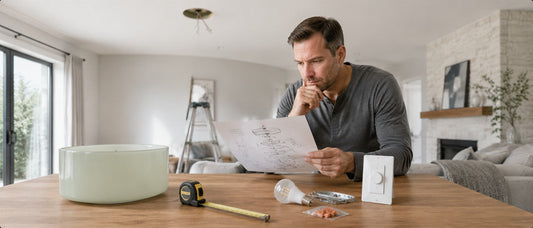
Before you click "Add to Cart," grab your tape measure and check these three things:
- The Vertical Clearance: Measure from the floor to eye level when seated.oes the lamp’s light source align comfortably?
- The Horizontal Gap: Measure the floor space available. Remember to account for baseboards and the gap needed for the lamp cord.
- The Reach: If the lamp is arched, how far into the room will it extend? If it is straight (like most glass standing lamps), does the shade diameter interfere with head space?
Conclusion
Finding the right size floor lamp isn't just about whether it fits through the door—it's about how it fits into your life. The perfect lamp respects the proportions of your room while adding a layer of functional beauty.
Glass floor lamps offer a unique advantage in sizing because they blend into the environment rather than blocking it out. If you are ready to add a piece that is perfectly scaled for both cozy corners and open concept living rooms, I highly recommend examining the dimensions of the Lumi Vintage Opal Textured Glass Eloise Floor Light. It is a masterclass in balancing height, footprint, and visual impact.
Tags:
Previous
The Art of Minimalist Lighting: How to Choose Fixtures That Aren't Boring or Busy
Next
Lighting Trends for Modern Apartments: How to Elevate Low-Ceiling Spaces