
The right number of pendant lights depends on the usable length of your island, the width of each fixture, and the sightlines you want to preserve. Start with proportion, not a fixed rule.

How Many Pendant Lights Should Go Over an Island?
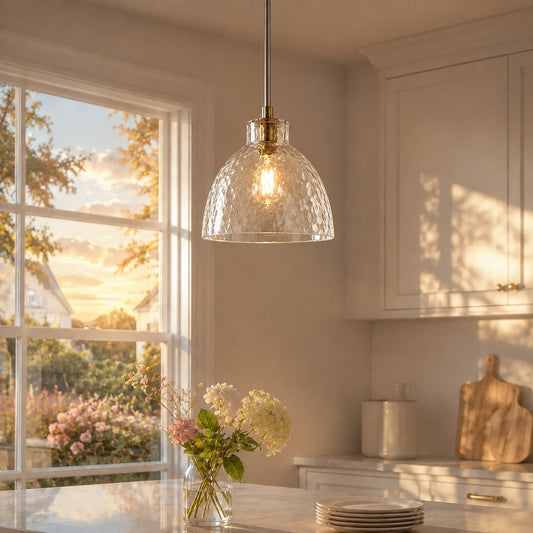
One large pendant can make a compact island feel calm and intentional. Two fixtures often suit a medium island because they create symmetry without filling every inch. Three smaller pendants can give a long island a useful rhythm, especially when seating or work zones repeat along the counter. The goal is not to hit a fashionable number. It is to create an arrangement that looks complete from the kitchen entrance and remains comfortable when people sit, cook, and talk across the island.
Measure the clear countertop run first. Exclude any section that disappears beneath a tall cabinet, overhangs an appliance, or does not belong to the main work and seating zone. Then mark a modest margin at both ends. The remaining center section is the visual field for your lights. Divide that field into equal parts and place each pendant at the center of its part. This simple method keeps the outer fixtures from drifting too close to the island edges.
Set the Spacing and Hanging Height
A common starting point is to hang the bottom of a pendant about 30 to 36 inches above the countertop. Treat that as a test position, not a universal command. A tall household, a deeper shade, or an open view into the living room may call for a small adjustment. Before installation, tape the fixture outline to the ceiling or suspend a lightweight paper shape at the proposed height. Walk around the room and sit at every island seat to check glare and sightlines.

Spacing should be read from the edges of the shades as well as from their center points. Two wide pendants can feel crowded even when their electrical boxes are evenly spaced. Smaller fixtures need enough separation to read as individual forms, while larger shades usually need fewer companions. Always confirm the final junction-box positions with the installer who will complete the work.
Match Fixture Scale to the Island
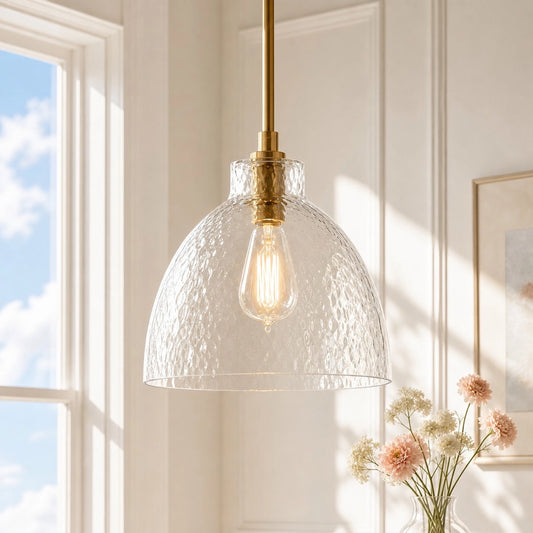
Think about the island as a volume, not just a line. A broad island with substantial cabinetry can support a fuller shade. A slim peninsula generally needs a lighter silhouette so the fixture does not dominate the counter. Clear or textured glass can help a pendant feel visually open because the eye continues through the shade, but the physical diameter still affects spacing.
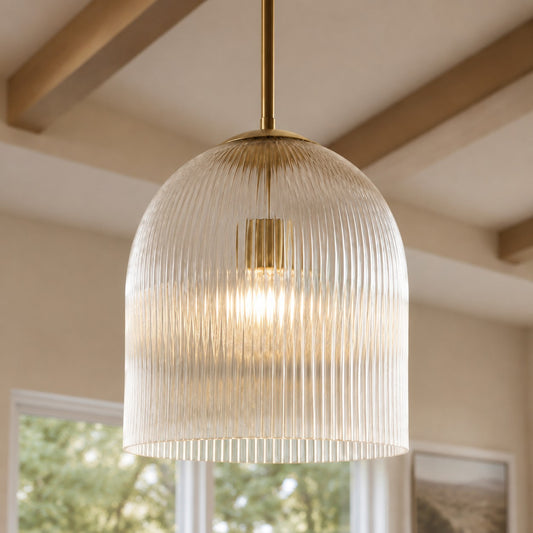
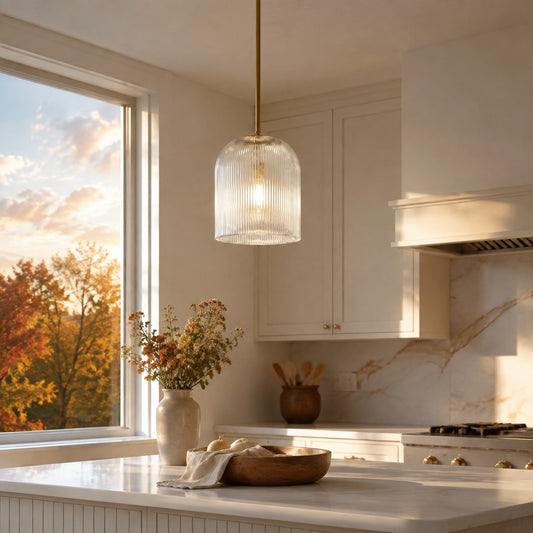
The Vireo ribbed glass pendant is available in several shade sizes and in brass or bronze finishes. That range makes it possible to choose one larger focal point or a repeated group after measuring the island. Its ribbed glass adds texture while maintaining a relatively open visual profile.

Make a Final Layout Check
Before ordering, write down five numbers: island length, island depth, ceiling height, proposed shade diameter, and proposed distance above the counter. Add the planned number of pendants and sketch the arrangement from both the long side and the end of the island. Check that cabinet doors can open, people can see across the counter, and the lighting plan includes other ambient or task sources instead of asking the pendants to do everything.
Finally, compare the finish with nearby cabinet hardware, faucets, and appliances in the actual room light. The metals do not have to match exactly, but they should feel deliberately related. When the measurements and finish work together, explore the Vireo pendant sizes and finishes and confirm the selected dimensions before installation.
Tags:
Previous
Flush Mount vs. Semi-Flush Lighting for Low Ceilings
Next
Bedside Lamp Size Guide: Height, Scale and Placement